Product overview
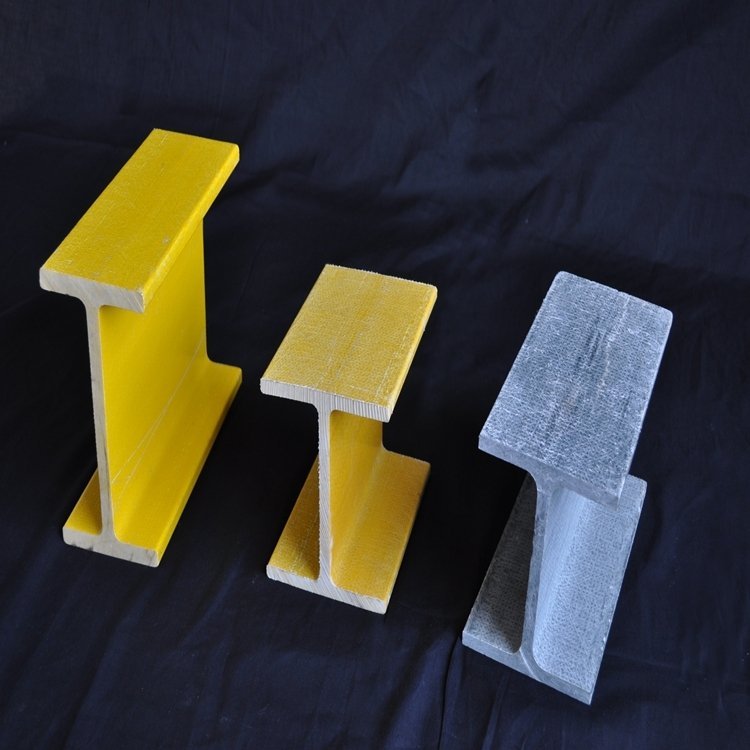
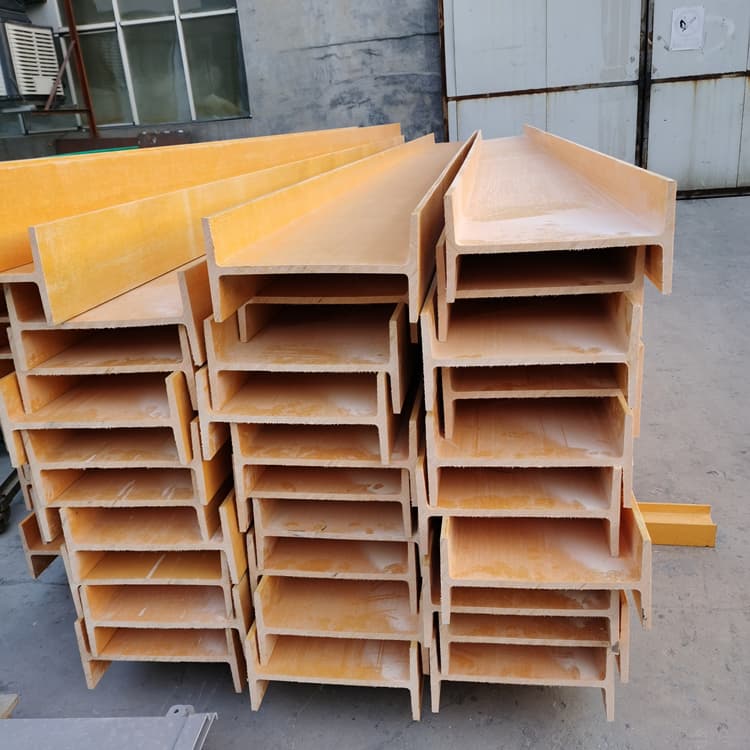
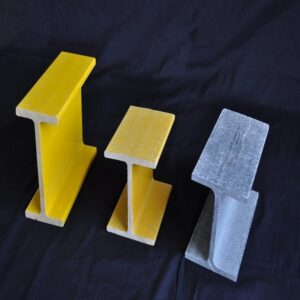
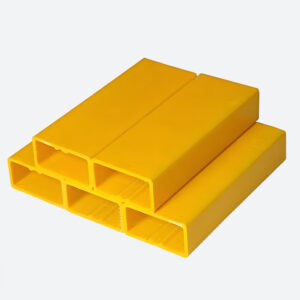
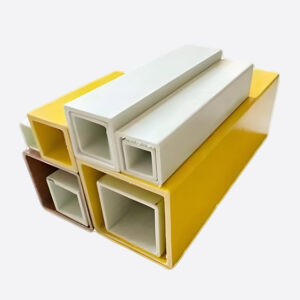
Fiberglass wood beams are pultruded rectangular or box-section FRP profiles manufactured to common lumber dimensions (e.g., 2″×4″, 2″×6″, 4″×4″ nominal profiles) and engineered for structural service. Unlike commodity plastic lumber, pultruded FRP lumber uses high glass-fiber content and controlled rovings/mat architecture to deliver predictable tensile/flexural performance for beams, joists and columns in corrosive or humid environments.
Key selling points
-
True wood-replacement geometry — available in standard lumber sizes to simplify retrofits and framing.
-
High strength-to-weight and measured stiffness — pultruded FRP profiles show tensile and flexural ranges comparable to engineered wood products and designed for span tables.
-
Corrosion & rot resistant — ideal for marine docks, wastewater, coastal construction and outdoor structures.
-
Low maintenance & long service life — no painting or chemical preservatives required.
-
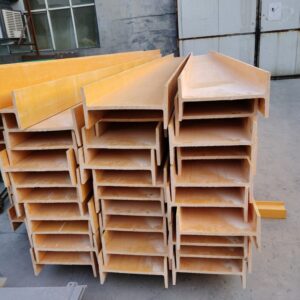
Standard stocked lengths & custom cut services — many suppliers stock 20 ft lengths and offer cut-to-length fabrication.
Typical technical specifications
Use supplier Product Data Sheets (PDS) for project design. The values below are industry-typical reference ranges for pultruded FRP lumber and pultruded profiles.
-
Manufacturing: Pultrusion with unidirectional rovings + stitched mat; thermoset resins (isophthalic polyester, vinyl-ester, epoxy options).
-
Tensile strength (longitudinal): typical pultruded profile range ~170–290 MPa (25–42 ksi) depending on fiber & resin.
-
Tensile/Flexural modulus (longitudinal): commonly ~13–25 GPa for structural pultrusions (higher values available for heavy roving constructions).
-
Density: approximately 1.6–2.0 g/cm³ (material is lighter than steel; actual weight depends on solid vs hollow cross-section).
-
Standard stock lengths: 20 ft (6.1 m) typical; some suppliers stock 8–25 ft options and offer custom lengths.
Common sizes & stock offerings
These are real, commonly offered pultruded lumber sizes — confirm with your supplier for exact stocked dimensions, tolerances and availability:
-
Rectangular / solid-style pultruded lumber (nominal):
-
2″ × 4″ (≈50 × 100 mm) — typical wall/solid variants for joists and rafters.
-
2″ × 6″ — deeper section for longer spans.
-
4″ × 4″ — column posts and heavy-duty supports.
-
Box / hollow beams / box-lumber: 4″×6″, 6″×6″ box sections — lighter weight with good bending stiffness.
-
Stock lengths: commonly 20 ft (6.1 m); some manufacturers provide 8′, 10′, 20′, and longer custom runs.
PDF document of Fiberglass Wood Beams parameters
Standard Dimensions for Fiberglass Wood Beams
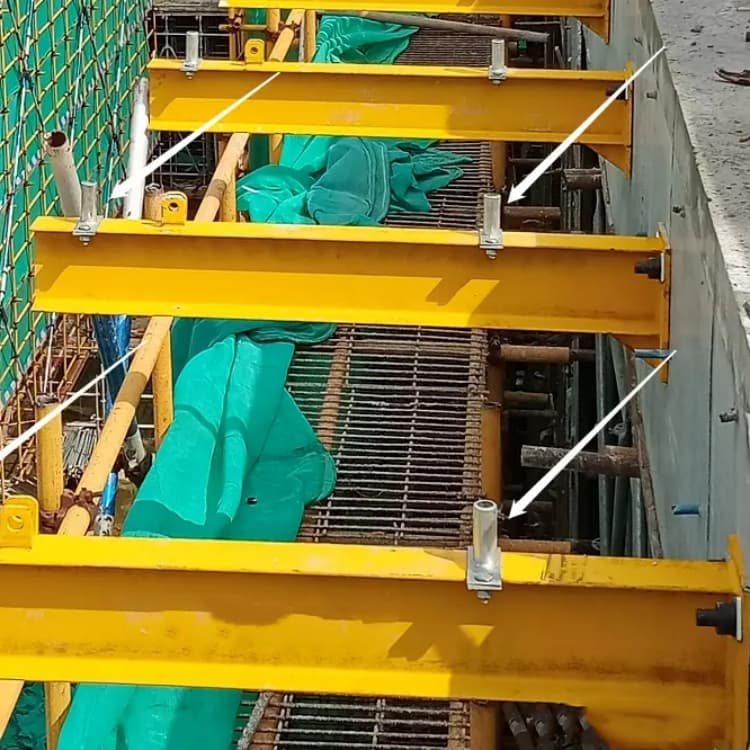
Applications — where buyers should specify FRP wood beams
-
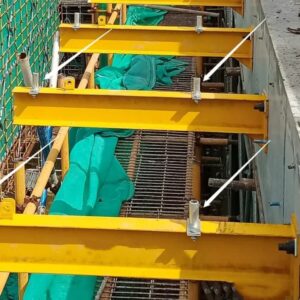
Marine docks, piers & boardwalks — rot- and salt-resistant replacements for creosote-treated wood.
-
Coastal & waterfront structures — columns, stringers and beams exposed to spray.
-
Wastewater & chemical plants — structural members in corrosive environments where timber fails.
-
Outdoor structures & landscape construction — pergolas, trellises, playgrounds where maintenance access is limited.
-
Replacement of timber in retrofit projects — same nominal sizes simplify design and reduce rework.
Advantages — why choose fiberglass wood beams over natural wood
-
Durability: Does not rot, warp, or attract termites — reliable in wet and humid conditions.
-
Predictable engineered performance: Pultruded profiles have certified mechanical properties (PDS) and span tables for engineering design.
-
Lower life-cycle cost: Reduced maintenance and longer intervals between replacements versus untreated or treated timber.
-
Fire & chemical options: Resin selection and fire-retardant formulations can meet project fire-performance requirements.
Comparison table — Fiberglass Wood Beams vs Wood / Plastic Lumber / Steel
| Property |
Fiberglass Wood Beams (pultruded FRP) |
Pressure-Treated Wood / Glulam |
Plastic Lumber (HDPE/Composite) |
Steel |
| Corrosion / rot resistance |
Excellent — inert to rot, insects, many chemicals. |
Variable — needs preservatives; subject to rot/insects over time |
Good (no rot) but UV & creep issues possible. |
Corrodes without protection |
| Structural stiffness & strength |
Engineered and predictable; span tables available. |
Good initially (glulam high stiffness) but degrades if wet |
Lower stiffness; often not structural for long spans. |
Very high stiffness; heavy |
| Maintenance |
Very low |
Medium–high (sealants, treatments) |
Low |
High (coatings) |
| Weight vs steel |
Much lighter |
Lighter than steel |
Lighter |
Heavy |
| Fire performance |
Dependent on resin/fillers; FR options exist. |
Flammable unless treated |
Flammable/varies |
Non-combustible |
Fabrication & installation notes
-
Cutting: Carbide saw blades or diamond blades; control dust and use PPE. Pre-drill fastener holes to avoid splitting for solid shapes.
-
Fastening: Use stainless steel or corrosion-resistant fasteners; for threaded connections use metal inserts or engineered fastener systems recommended by supplier.
-
Joining & adhesives: Structural adhesives and mechanical fasteners work well; follow supplier bonding guidelines and select compatible sealants for weather-tight joints.
-
Thermal & creep considerations: FRP has different thermal expansion and long-term creep behaviour compared to wood—check supplier creep data for long-span or highly loaded members.
E-A-T
-
Expertise: Pultrusion manufacturers publish PDS with laminate schedules and test methods (ASTM D638, D790 etc.) — require these documents for structural specifications.
-
Authoritativeness: Request supplier ISO/QC certificates, third-party test reports and span/load tables to include in bids and drawings.
-
Trustworthiness: For safety-critical projects ask for lot traceability, sample coupons and independent lab tests; always include FRP data in structural submittals.
FAQ
Q1 — Are fiberglass wood beams the same size as standard lumber?
A: They are offered in the same nominal sizes (e.g., 2×4, 2×6, 4×4) to simplify replacement, but check supplier actual cross-section and tolerances before designing or retrofitting.
Q2 — Can FRP wood beams be used as load-bearing joists?
A: Yes — pultruded FRP lumber is engineered for structural use. Use the supplier’s span/load tables and PDS for design; consult a structural engineer for safety-critical projects.
Q3 — How do I order samples or test coupons?
A: Request sample coupons or short lengths from the supplier with the specified resin system and laminate schedule; suppliers commonly provide small sample pieces for qualification testing.
Q4 — Will FRP lumber warp or split like wood?
A: No — pultruded FRP does not warp or split from moisture cycling; it maintains dimensional stability in damp conditions.
Q5 — What information should I include in an RFQ?
A: Provide required nominal size (e.g., 2×6), actual cross-section if known, desired resin (polyester/vinyl-ester/epoxy), length(s), quantity and any finish or fabrication (cutting, drilling) needs. Suppliers will return PDS, weight/ft, price and lead time.
Call to action
To get a formal quote, span tables and certified product datasheets, send us: nominal size (e.g., 2×4), length, resin preference (polyester / vinyl-ester / epoxy), quantity and any secondary services (cut-to-length, pre-drill). We will respond with pricing per linear foot, lead time and technical datasheets.