
Chemical Processing Plants
Structural supports, platforms, handrails and cable trays resistant to aggressive chemical fumes and splashes.
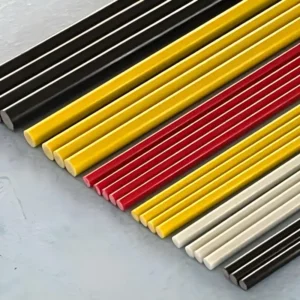
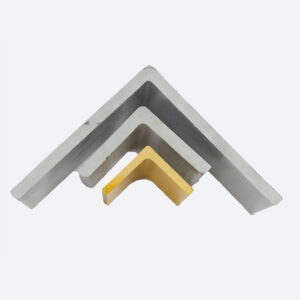
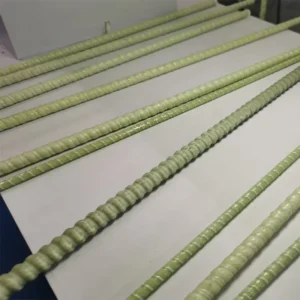
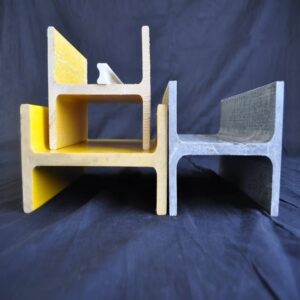
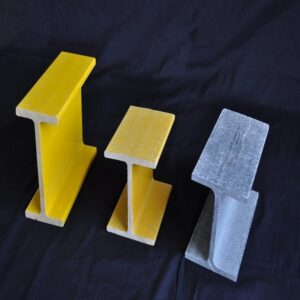
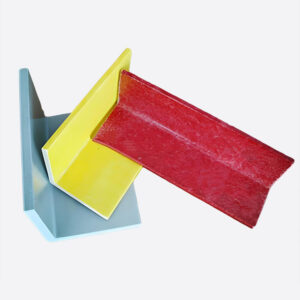
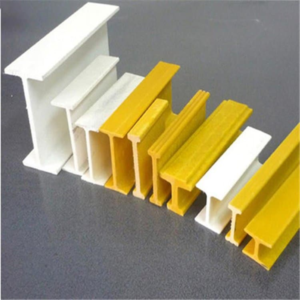
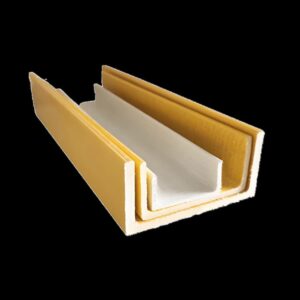
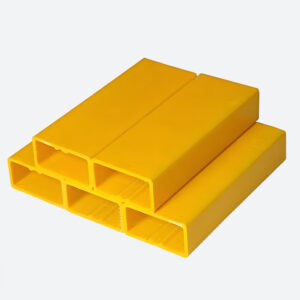
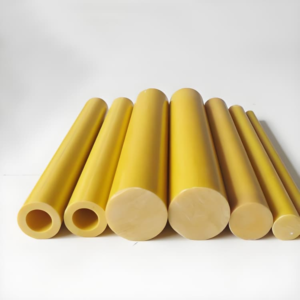
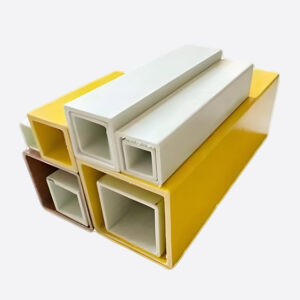
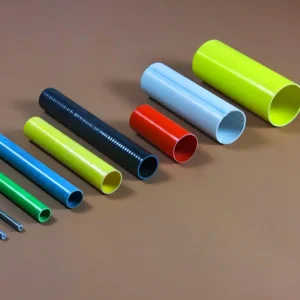
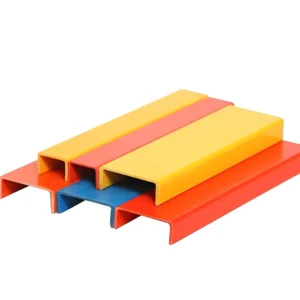
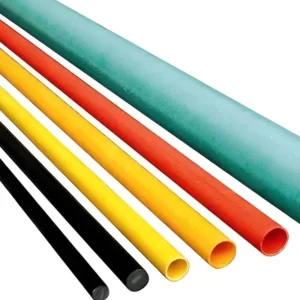
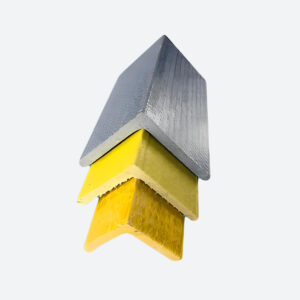
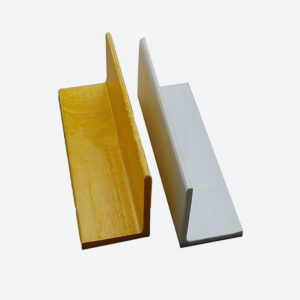
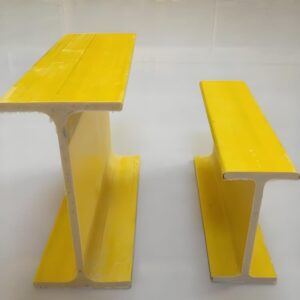
Pultruded fiberglass structural profiles including round tubes, square tubes, rectangular tubes, I-beams, U-channels, angles, T-sections and custom shapes. Manufactured from glass fiber reinforced polymer (FRP) with excellent corrosion resistance, high strength-to-weight ratio, electrical insulation and dimensional stability for construction, chemical processing, marine and industrial applications.
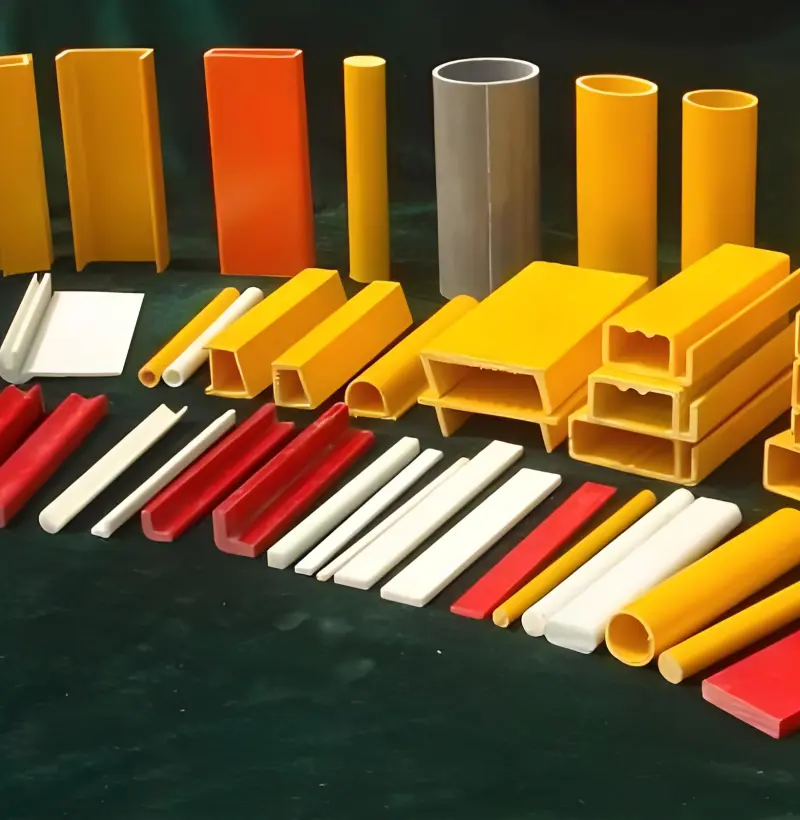
Explore pultruded fiberglass profiles including round tubes, square tubes, rectangular tubes, I-beams, U-channels, angles, T-sections, and custom shapes. Available in various resin systems (polyester, vinyl ester, epoxy) and surface finishes for diverse industrial applications.
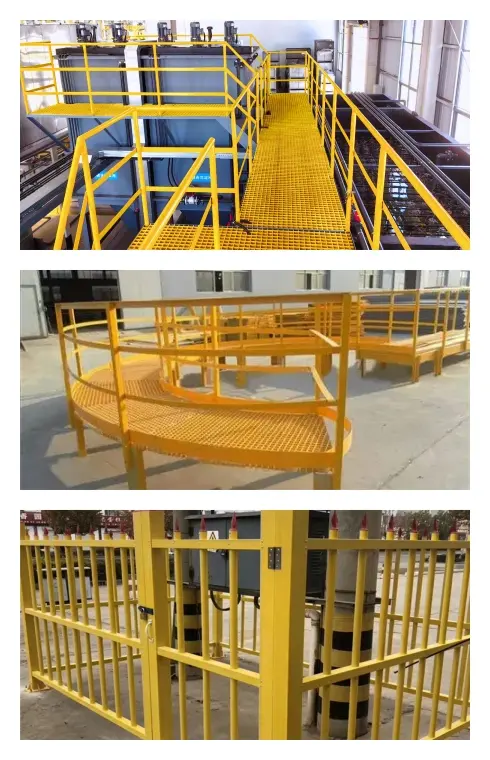
FRP (Fiber Reinforced Polymer) profiles are manufactured by the pultrusion process, where continuous glass fiber rovings, mats, and surface veils are pulled through a resin bath and heated die to form strong, lightweight structural shapes. The most common profiles include round tubes, square tubes, rectangular tubes, I-beams, U-channels, angles, T-sections, and flat bars.
These profiles offer outstanding corrosion resistance to a wide range of chemicals, salt water, and environmental exposure, making them an ideal alternative to steel, aluminum, and wood in corrosive or electrically sensitive applications. They are non-magnetic, non-conductive, and have high strength-to-weight ratio, providing long service life with minimal maintenance.
We supply FRP profiles for overseas distributors, construction companies, industrial buyers, maintenance companies and OEM customers, with different shapes, resin systems, dimensions, lengths and custom fabrication available according to specification.
FRP profiles combine corrosion resistance, lightweight construction, high strength and electrical insulation, making them superior to traditional materials in many demanding environments.
FRP profiles withstand aggressive chemicals, salt spray, moisture and UV exposure without rusting or degrading, reducing maintenance costs.
With a density about 1/4 that of steel, FRP profiles are easy to transport and install while providing excellent mechanical performance.
FRP is non-conductive and non-magnetic, making it suitable for electrical enclosures, antennas, and other sensitive applications.
Low coefficient of thermal expansion and resistance to warping ensure consistent performance over a wide temperature range.
FRP profiles typically last 20-30 years or more in harsh environments, offering excellent lifecycle value.
Suitable for distributors, construction companies, OEM customers and bulk purchasing programs.
The following table provides a general comparison of typical properties for FRP profiles versus steel, aluminum, and wood. Values are representative and may vary depending on specific grades and formulations.
| Property | FRP Profile | Steel | Aluminum | Wood |
|---|---|---|---|---|
| Density (g/cm³) | 1.8 – 2.0 | 7.85 | 2.7 | 0.6 – 0.8 |
| Tensile Strength (MPa) | 300 – 600 | 400 – 800 | 200 – 400 | 50 – 100 |
| Corrosion Resistance | Excellent | Poor (requires coating) | Good | Poor (rot, insects) |
| Electrical Insulation | Yes | No (conductive) | No (conductive) | Partial (when dry) |
| Thermal Conductivity (W/m·K) | 0.3 – 0.5 | 45 – 60 | 200 – 237 | 0.1 – 0.2 |
| Maintenance Requirement | Low | High (painting) | Low | High (sealing, painting) |
| Typical Service Life | 20 – 30+ years | 10 – 20 years (coated) | 15 – 25 years | 5 – 15 years |
* Values are typical reference values for common grades and may vary depending on specific resin systems, fiber content, and manufacturing process. Always confirm with our technical team for your application.
Technical properties depend on resin system (polyester, vinyl ester, epoxy), fiber content, and profile shape. The values below are typical for standard pultruded FRP profiles and should be confirmed for the selected configuration before ordering.
| Product | FRP Pultruded Profiles |
|---|---|
| Available Shapes | Round tube, square tube, rectangular tube, I-beam, U-channel, angle, T-section, flat bar, custom profiles |
| Resin Systems | Unsaturated polyester, vinyl ester, epoxy (others available upon request) |
| Fiber Reinforcement | E-glass continuous roving, continuous filament mat, surface veil |
| Density | 1.8 – 2.0 g/cm³ |
| Tensile Strength | 300 – 600 MPa (longitudinal) |
| Flexural Strength | 200 – 500 MPa (longitudinal) |
| Flexural Modulus | 20 – 40 GPa (longitudinal) |
| Barcol Hardness | 40 – 60 |
| Water Absorption | < 0.5% (24 h immersion) |
| Continuous Use Temperature | -50°C to +120°C (polyester); up to +150°C (epoxy) depending on resin system |
| Electrical Insulation | Dielectric strength > 10 kV/mm (depending on profile thickness) |
| Profile Length | Standard: 6 m or 12 m; custom lengths available |
| Color | Natural (gray/green), black, or custom colors with UV-resistant coating |
| Supply Form | Straight lengths, cut-to-length pieces, fabricated assemblies; custom packaging available |
| Compliance | ISO 9001 quality management; RoHS compliance available where applicable; fire-retardant grades available |
FRP profiles are available in a wide range of standard dimensions. The following table lists common size ranges for each shape. Custom dimensions and lengths can be produced according to customer requirements.
| Shape | Common Size Range | Typical Application | Resin System |
|---|---|---|---|
| Round Tube | OD 10 – 300 mm; wall 1.5 – 10 mm | Handrails, structural supports, piping | Polyester / Vinyl ester |
| Square Tube | 20×20 – 200×200 mm; wall 2 – 10 mm | Frames, platforms, cable trays | Polyester / Vinyl ester |
| Rectangular Tube | 20×30 – 100×200 mm; wall 2 – 8 mm | Structural beams, equipment supports | Polyester / Epoxy |
| I-Beam | Height 50 – 300 mm; flange width 25 – 150 mm | Main structural members, bridges | Polyester / Vinyl ester |
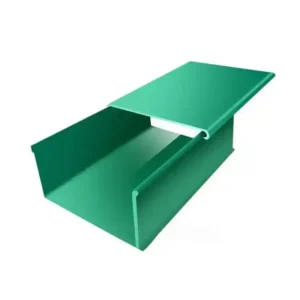
| U-Channel | Height 30 – 200 mm; width 20 – 80 mm | Cable trays, guides, edges | Polyester / Vinyl ester |
| Angle | 20×20 – 150×150 mm; thickness 3 – 10 mm | Corners, brackets, supports | Polyester / Epoxy |
| T-Section | Height 30 – 150 mm; flange 30 – 120 mm | Stiffeners, frames | Polyester / Vinyl ester |
| Flat Bar | Width 20 – 300 mm; thickness 3 – 20 mm | Insulators, strips, custom fabrication | Polyester / Vinyl ester |
* Reference sizes are shown for procurement guidance. Custom dimensions, wall thicknesses, and lengths are available subject to specification. Consult our team for non-standard profiles.
FRP profiles are used across numerous industries where corrosion resistance, lightweight structure, and electrical insulation are critical.
Structural supports, platforms, handrails and cable trays resistant to aggressive chemical fumes and splashes.
Walkways, ladders, gratings and structural profiles resistant to salt water corrosion.
Antenna supports, cable trays, and insulating profiles for high-voltage equipment.
Weirs, baffles, walkways and structural components in wet and chemically aggressive environments.
Bridge components, fences, railings and structural profiles in coastal or corrosive environments.
Custom structural supports, brackets, guides and machined components for specialized equipment.
The correct FRP profile shape, resin system, and dimensions should be selected based on chemical environment, mechanical load, temperature, and electrical requirements.
Identify the chemicals, moisture, and UV exposure to choose the appropriate resin system: polyester for general use, vinyl ester for stronger acids, epoxy for high temperature and mechanical demands.
Determine the structural requirements (bending, tension, compression) to select the profile shape and dimensions with sufficient strength and stiffness.
Specify the profile shape, cross-section dimensions, and required length. Standard lengths are 6 m or 12 m; custom lengths can be cut.
Specify if fire-retardant, UV-resistant, RoHS, or other certifications are required for your application.
Precision fiber alignment, resin impregnation and curing are critical for reliable FRP profile performance.
Continuous E-glass rovings, mats and surface veils are arranged according to the required fiber architecture and orientation.
The fiber package is pulled through a resin bath and heated forming die, where the profile is shaped and cured.
Profiles are cut to specified lengths and inspected for dimensional accuracy, surface quality and mechanical properties.
Finished profiles are bundled, protected and packaged for safe transport and storage.
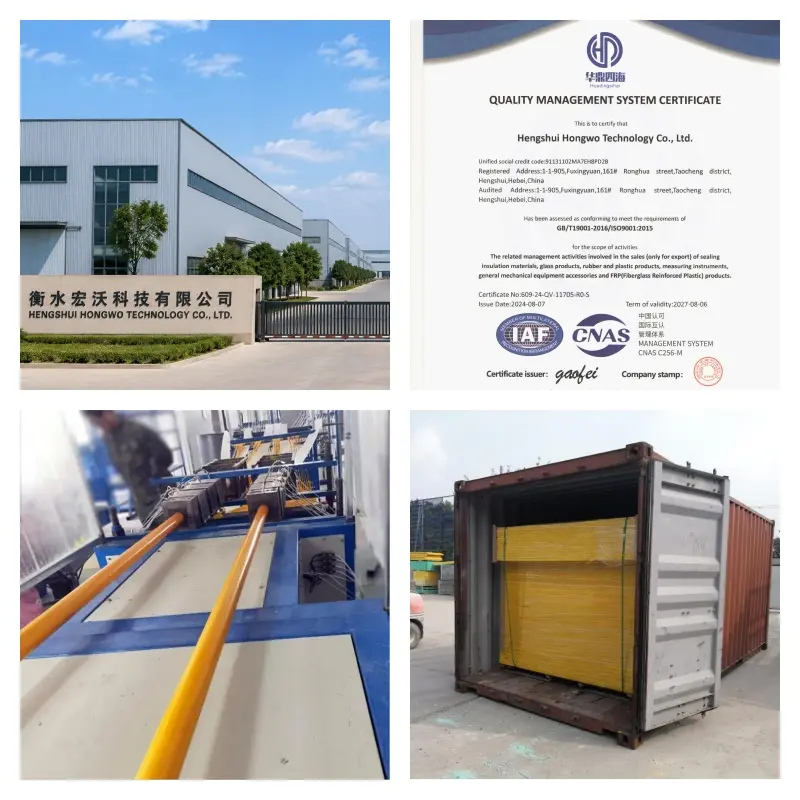
We focus on supplying high-quality pultruded FRP profiles to overseas distributors, construction companies, OEM customers and industrial buyers.
The more technical information you provide, the more accurately we can recommend the appropriate FRP profile and prepare a quotation.
You can also send a drawing, required specifications or application details after our sales team contacts you.
Tell us your shape, dimensions, resin system, operating environment and quantity. Our team will review your requirements and provide a suitable product recommendation and quotation.
Request a QuoteExplore related products for industrial and structural applications.
Lightweight, corrosion-resistant fiberglass reinforced plastic grating designed for walkways, platforms, and trench covers in chemically aggressive environments.
View FRP Grating →Durable, non-conductive fiberglass guardrail systems offering long-term safety and corrosion resistance in industrial, marine, and chemical facilities.
View FRP Guardrail Systems →Pultruded fiberglass reinforced plastic structural profiles providing high strength-to-weight ratio and corrosion resistance for framework, supports, and custom fabrications.
View FRP Profiles →Structural fiberglass ladders and safety cages engineered for corrosion-free access solutions in water treatment, chemical processing, and offshore installations.
View FRP Ladders and Cages →