
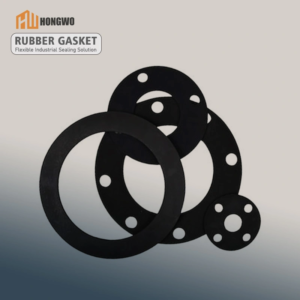
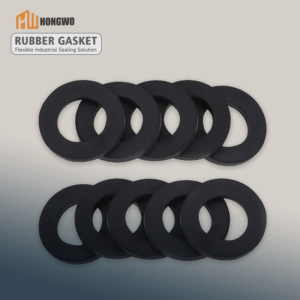
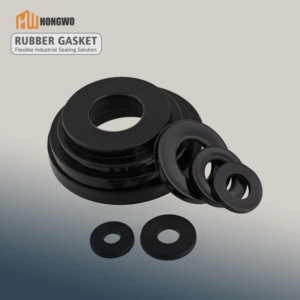
Automotive Sealing
Gaskets for oil pans, valve covers, transmission pans and other engine components requiring oil and fuel resistance.
Rubber gaskets manufactured from natural rubber (NR), nitrile (NBR), neoprene (CR), EPDM, silicone, viton (FKM) and more. Offering excellent flexibility, chemical resistance, temperature tolerance and reliable sealing performance for flanges, pipes, vessels and industrial equipment. Available as cut or molded gaskets with custom dimensions.
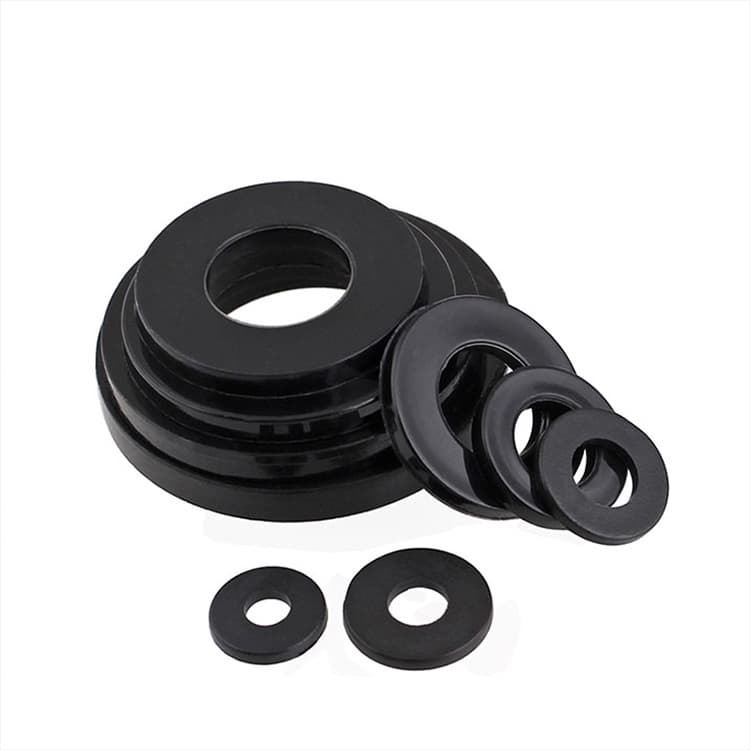
Explore rubber gaskets in various elastomer materials including natural rubber, nitrile, neoprene, EPDM, silicone, viton and more. Available as cut or molded gaskets with custom inner diameter, outer diameter and thickness to suit your flange or equipment requirements.
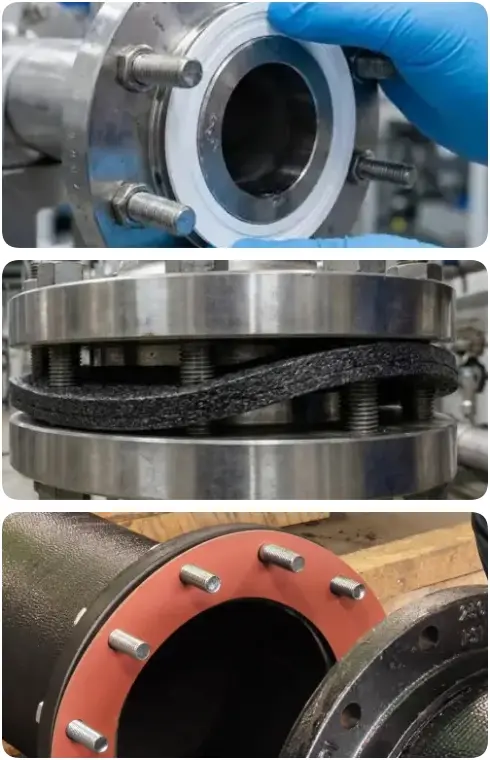
Rubber gaskets are sealing components manufactured from various elastomer materials, either by die-cutting from rubber sheet or by compression molding into the desired shape. They are widely used in automotive, plumbing, chemical, food processing and general industrial applications where flexibility, resilience and fluid resistance are required.
Rubber gaskets are available in a wide range of polymers: natural rubber (NR) for high elasticity and tear strength; nitrile rubber (NBR) for excellent oil and fuel resistance; neoprene (CR) for weather, ozone and moderate oil resistance; EPDM for outstanding weather, ozone and water/steam resistance; silicone for wide temperature range and flexibility; fluoroelastomer (FKM/Viton) for superior chemical and high-temperature resistance; and SBR for general-purpose economy. Custom dimensions and non-standard shapes can be produced according to drawings or samples.
We supply rubber gaskets for overseas distributors, industrial buyers, gasket fabricators, maintenance companies and OEM customers, with different polymers, hardness grades, dimensions, thicknesses and packaging available according to specification.
Rubber gaskets offer a unique combination of flexibility, elasticity, sealing capability and material versatility, making them suitable for diverse industrial applications.
Rubber gaskets conform to irregular surfaces, providing reliable sealing and cushioning even on rough or uneven flanges.
Choose from NR, NBR, CR, EPDM, Silicone, FKM, SBR and specialty compounds to match specific oil, chemical, temperature and weather requirements.
Depending on polymer, rubber gaskets can operate from -60°C to +250°C, covering cryogenic to high-temperature service.
Specific grades offer resistance to oils, fuels, acids, alkalis, ozone, UV, steam and water, ensuring long-term performance in harsh environments.
Rubber gaskets can be easily die-cut, waterjet cut, or molded into complex shapes for various sealing applications.
Suitable for industrial distributors, gasket fabricators, OEM customers, maintenance companies and bulk purchasing.
Technical properties depend on the specific polymer type, compound formulation and gasket thickness. The values below provide a general reference for common rubber gasket materials. Detailed properties should be confirmed for the selected compound before ordering.
| Product | Rubber Gasket |
|---|---|
| Available Materials | Natural Rubber (NR), Nitrile (NBR), Neoprene (CR), EPDM, Silicone (VMQ), Fluoroelastomer (FKM/Viton), SBR, Butyl (IIR), Hypalon (CSM) and others |
| Hardness Range | 20–95 Shore A depending on polymer and compound |
| Density | 1.0–1.9 g/cm³ depending on polymer and filler content |
| Temperature Range | NR: -50°C to +70°C; NBR: -30°C to +100°C (short-term +120°C); CR: -30°C to +100°C; EPDM: -40°C to +120°C (short-term +150°C); Silicone: -60°C to +200°C (short-term +230°C); FKM: -20°C to +200°C (short-term +250°C); SBR: -30°C to +70°C. Actual limits depend on compound and service conditions. |
| Tensile Strength | 3–20 MPa depending on polymer and compound; NR typically 10–20 MPa, NBR 7–15 MPa, EPDM 7–15 MPa, Silicone 4–8 MPa, FKM 8–15 MPa |
| Elongation at Break | 100–700% depending on polymer; NR typically 300–700%, NBR 200–500%, EPDM 200–600%, Silicone 100–400%, FKM 150–300% |
| Chemical Resistance | Varies by polymer: NBR excellent for oils and fuels; CR good for oils, weather; EPDM excellent for water, steam, ozone; Silicone good for high and low temperatures; FKM excellent for chemicals, oils, fuels; NR good for abrasion but poor for oils. Verify with actual medium. |
| Gasket Thickness | 0.5 mm to 10 mm typical; common thicknesses: 1.0 mm, 1.5 mm, 2.0 mm, 3.0 mm, 5.0 mm. Custom thicknesses available |
| Gasket Dimensions | Custom inner diameter and outer diameter according to flange or equipment; typical OD range from 10 mm to 1500 mm or larger |
| Supply Form | Cut gaskets, molded gaskets, or rings; customized packaging available subject to specification |
| Compliance | ISO 9001 quality management and RoHS compliance documentation available where applicable; food-grade (FDA), flame-retardant (UL94) and other certifications available for specific compounds |
Rubber gaskets are manufactured to custom inner diameters, outer diameters and thicknesses. The following table lists common thicknesses with typical applications. Inner and outer diameters are produced according to flange or equipment dimensions.
| Thickness | Typical OD Range | Typical Application | Common Materials |
|---|---|---|---|
| 0.5 mm | 10–300 mm | Thin flange gaskets, diaphragms, shims | NR, NBR, CR, EPDM |
| 1.0 mm | 10–500 mm | General flange gaskets, water, oil | NR, NBR, CR, EPDM |
| 1.5 mm | 10–800 mm | Flange gaskets, cushioning, vibration pads | NR, NBR, EPDM, Silicone |
| 2.0 mm | 10–1000 mm | Standard gaskets, pump covers, access panels | NR, NBR, CR, EPDM, FKM |
| 3.0 mm | 20–1200 mm | Thicker gaskets, uneven flanges, insulation | NR, NBR, CR, EPDM, Silicone, FKM |
| 5.0 mm | 20–1500 mm | Heavy-duty gaskets, large flanges, vibration damping | NR, NBR, CR, EPDM |
| 8.0 mm | 20–1500 mm | Thick pads, dock bumpers, special seals | NR, NBR, CR |
| 10 mm | 20–1500 mm | Very thick gaskets, heavy cushioning | NR, NBR, CR, EPDM |
* Reference thicknesses and typical outer diameter ranges are shown for procurement guidance. All dimensions are customizable. Inner diameters are produced according to flange bore or pipe size. Custom metric and inch dimensions are available subject to specification.
Rubber gaskets are used across a wide range of industries where flexibility, fluid resistance, temperature stability and vibration damping are essential for reliable sealing.
Gaskets for oil pans, valve covers, transmission pans and other engine components requiring oil and fuel resistance.
EPDM rubber gaskets for pipe flanges, valves and fittings in hot and cold water systems.
FKM and EPDM gaskets for flanges handling aggressive chemicals, solvents and corrosive media.
FDA-compliant silicone and EPDM gaskets for sanitary piping, reactors and food processing equipment.
Rubber gaskets used as anti-vibration pads and insulators in machinery and equipment.
Custom rubber gaskets for pumps, compressors, heat exchangers and general machinery.
The correct rubber gasket material, hardness, dimensions and thickness should be selected based on chemical exposure, temperature, pressure, flange type and required compliance.
Choose the rubber polymer based on the main service requirements: NBR for oil resistance, EPDM for weather and steam, CR for weather and moderate oil, FKM for high chemicals, Silicone for high/low temperature, NR for elasticity and abrasion.
Specify Shore A hardness and gasket thickness. Thicker gaskets and softer grades compensate for rough or uneven surfaces; harder grades provide better load bearing.
Define temperature range, chemical exposure, UV/ozone exposure, pressure and mechanical load to select the optimal compound.
Specify if FDA, RoHS, REACH, UL flame rating or other certifications are required for the final application.
Consistent compound formulation, curing, dimensional accuracy and surface finish are critical for reliable rubber gasket performance.
Rubber polymers, fillers, plasticizers, curing agents and additives are mixed to achieve the specified compound properties.
Rubber gaskets are produced by compression molding into the required shape or by die-cutting from rubber sheet to the specified dimensions.
Gaskets are vulcanized to develop final mechanical properties, then inspected for dimensions, hardness, tensile strength and surface defects.
Gaskets are packaged individually or in sets with protective interleaving, ready for export.
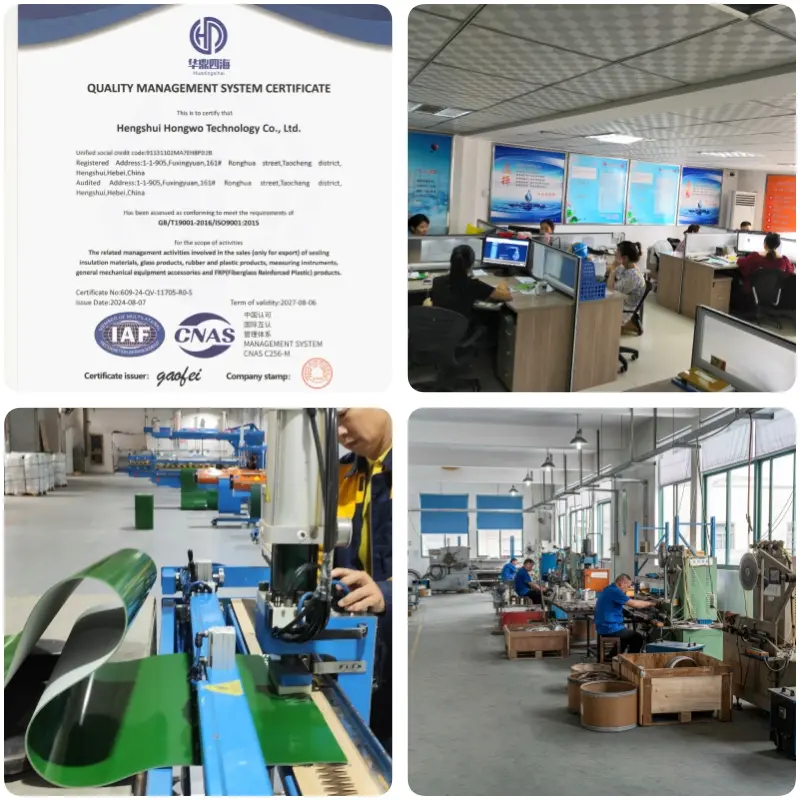
We focus on supplying industrial elastomer gaskets to overseas distributors, equipment manufacturers, maintenance companies and industrial buyers.
The more technical information you provide, the more accurately we can recommend the appropriate rubber gasket compound and prepare a quotation.
You can also send a drawing, required specifications or application details after our sales team contacts you.
Tell us your polymer, hardness, dimensions, operating conditions and compliance requirements. Our team will review your requirements and provide a suitable product recommendation and quotation.
Request a QuoteExplore related sealing products and materials for different industrial equipment and operating conditions.
General-purpose elastomer sheet available in various thicknesses and compounds for gasket fabrication, cushioning, and fluid-sealing applications.
View Rubber Sheet →Universal chemical-resistant gasket offering a non-stick surface and broad temperature tolerance for sealing aggressive acids, solvents, and process fluids.
View PTFE Gasket →High-performance gasket made from flexible graphite, delivering outstanding chemical resistance and sealability at extreme temperatures and pressures.
View Graphite Gasket →Metal-reinforced spiral wound gasket with flexible filler material, designed for high-pressure, high-temperature flange connections in petrochemical and power industries.
View Spiral Wound Gasket →