
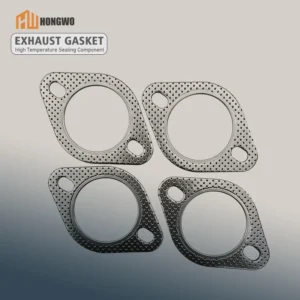
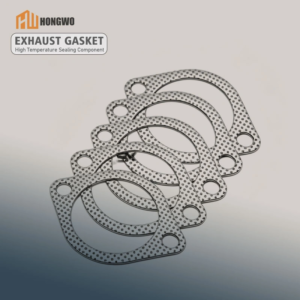
Exhaust Manifolds
Gaskets between exhaust manifold and cylinder head, sealing combustion exhaust gases under high temperature and vibration.
Exhaust gaskets manufactured from stainless steel, graphite composite, non-asbestos fiber and multi-layer steel (MLS) constructions. Designed for exhaust manifolds, turbochargers, EGR systems and high-temperature piping. Excellent resistance to thermal cycling, vibration and corrosive exhaust gases for long service life.
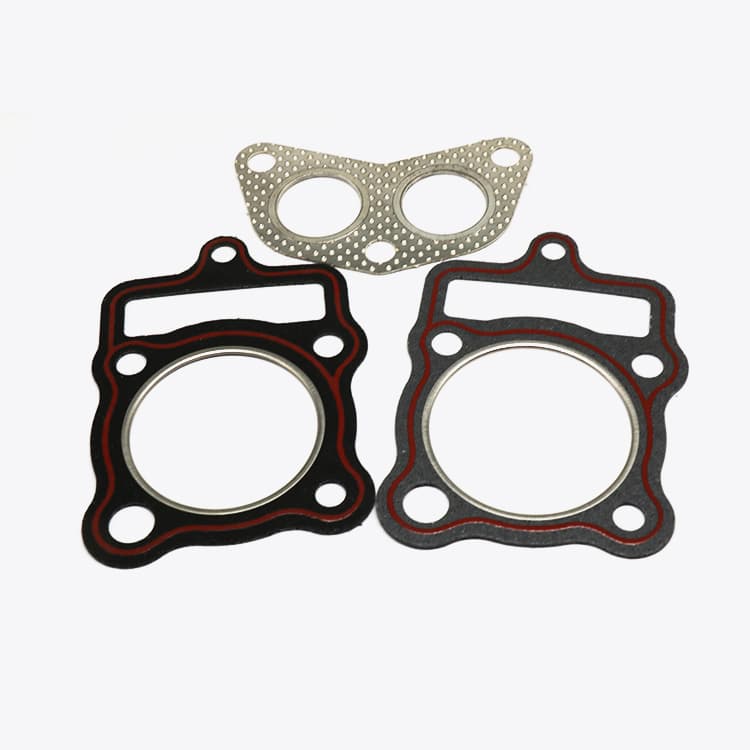
Explore exhaust gaskets in various material constructions for high-temperature sealing. Available as standard or custom-shaped gaskets with tailored dimensions to suit exhaust manifolds, turbochargers, flanges and piping.
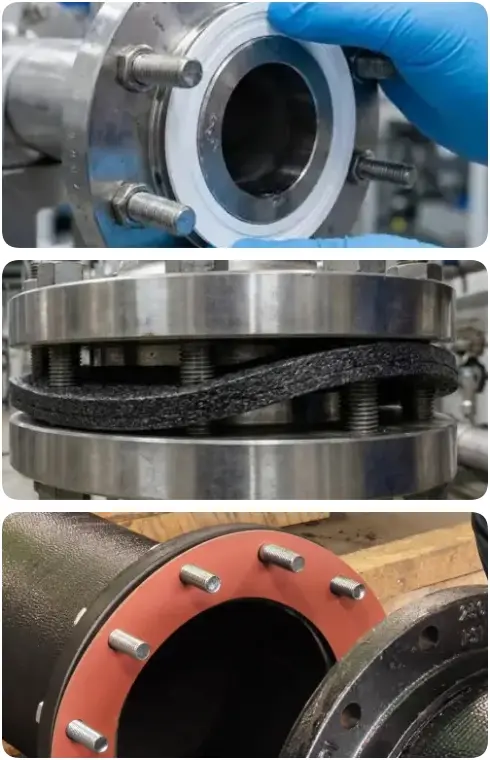
Exhaust gaskets are sealing components specifically designed for exhaust manifolds, turbochargers, EGR valves, catalytic converters and exhaust piping connections. They must withstand extreme temperatures, thermal cycling, vibration, and corrosive exhaust gases while maintaining a reliable seal.
Common exhaust gasket constructions include multi-layer steel (MLS) with embossed stainless steel layers, graphite composite with metal core or facing, non-asbestos fiber with high-temperature binder, and solid metal or spiral wound designs. Each offers different benefits in terms of temperature resistance, conformability, blow-out resistance and durability.
We supply exhaust gaskets for overseas distributors, industrial buyers, automotive aftermarket, maintenance companies and OEM customers, with custom shapes, dimensions, material combinations and packaging available according to specification.
Exhaust gaskets are engineered to provide reliable sealing under the harshest conditions of temperature, vibration and corrosion found in exhaust systems.
Constructed from materials that maintain integrity at continuous temperatures up to +1000°C, suitable for close-coupled exhaust applications.
Designed to withstand rapid temperature changes without loss of sealing force, preventing leaks and gasket failure.
Robust metal and composite constructions resist loosening and blow-out caused by engine vibration and exhaust pressure pulses.
Stainless steel, graphite and high-temperature coatings provide excellent resistance to exhaust condensate, acids and corrosive gases.
Available in standard flange patterns or manufactured to custom drawings for specific exhaust manifold and turbocharger configurations.
Suitable for automotive aftermarket distributors, OEM customers, maintenance companies and bulk purchasing.
Technical properties depend on the gasket construction and material combination. The values below are typical for high-performance exhaust gaskets and should be confirmed for the selected type before ordering.
| Product | Exhaust Gasket |
|---|---|
| Material Constructions | Multi-Layer Steel (MLS) with stainless steel (301, 304, 316L); Graphite composite with steel core; Non-asbestos fiber with high-temperature binder; Solid metal (copper, steel); Spiral wound with graphite filler |
| Temperature Range | MLS: -40°C to +600°C continuous; Graphite composite: -200°C to +450°C (oxidizing) / +650°C (steam); Non-asbestos: -40°C to +250°C; Solid metal (copper): up to +400°C; Solid steel: up to +600°C. Some ceramic-based gaskets up to +1000°C. Actual limits depend on material combination. |
| Pressure Range | Up to 30 bar depending on gasket design and flange clamping force. Exhaust systems typically operate at low to moderate pressure but with high temperature and vibration. |
| Tensile Strength | Varies by material: MLS ≥ 600 MPa (steel layer); graphite composite ≥ 4 MPa (graphite layer); non-asbestos ≥ 7 MPa. |
| Compressibility | 5–15% at 35 MPa depending on material and construction. |
| Recovery | ≥ 40% typical for compressible gaskets; MLS gaskets rely on spring-back of embossed layers. |
| Chemical Resistance | Resistant to exhaust gases, condensation, oils and fuels. Graphite resists most chemicals except strong oxidizers. Stainless steel resists corrosion; check grade for specific media. |
| Gasket Thickness | 0.5 mm to 5.0 mm typical; MLS gaskets often 0.5–1.5 mm total thickness; graphite composite up to 3.0 mm. Custom thicknesses available. |
| Gasket Dimensions | Custom according to exhaust manifold or flange pattern. Typical sizes from small turbocharger gaskets (50 mm OD) to large industrial exhaust flanges (600 mm OD or larger). |
| Supply Form | Individual gaskets, sets, or bulk packaging; customized packaging available subject to specification. |
| Compliance | ISO 9001 quality management and RoHS compliance documentation available where applicable; confirm documentation requirements before ordering. |
Exhaust gaskets are manufactured to custom dimensions based on flange or manifold patterns. The following table lists common thicknesses with typical applications. Inner and outer diameters, bolt hole positions and shapes are produced according to customer drawings or samples.
| Thickness | Typical OD Range | Typical Application | Common Construction |
|---|---|---|---|
| 0.5 mm | 30–200 mm | Turbocharger outlet, small flanges | MLS / Solid metal |
| 0.8 mm | 30–300 mm | EGR valves, sensor flanges | MLS / Graphite composite |
| 1.0 mm | 50–400 mm | Exhaust manifold to head, downpipe flanges | MLS / Graphite composite |
| 1.5 mm | 50–600 mm | Catalytic converter flanges, industrial exhaust | Graphite composite / Non-asbestos |
| 2.0 mm | 80–800 mm | Large exhaust flanges, diesel engine manifolds | Graphite composite / Spiral wound |
| 3.0 mm | 100–1000 mm | Heavy-duty industrial exhaust systems | Graphite composite / Spiral wound |
* Reference thicknesses and typical outer diameter ranges are shown for procurement guidance. All dimensions, shapes and bolt patterns are customizable. Custom metric and inch dimensions are available subject to specification.
Exhaust gaskets are used across automotive, marine, power generation and industrial equipment where high-temperature sealing of exhaust gases is critical.
Gaskets between exhaust manifold and cylinder head, sealing combustion exhaust gases under high temperature and vibration.
Gaskets for turbocharger mounting flanges, oil drain and inlet/outlet connections requiring heat and pressure resistance.
Exhaust gas recirculation valve and cooler gaskets resistant to exhaust gas and thermal cycling.
Flange gaskets for catalytic converters, diesel particulate filters and exhaust after-treatment systems.
Exhaust gaskets for marine diesel engines, generators and large industrial power plants.
Gaskets for custom exhaust systems, headers and performance exhaust applications.
The correct exhaust gasket construction and material should be selected based on temperature, vibration, flange type, chemical exposure and required durability.
Choose MLS for high temperature and vibration; graphite composite for conformability and high temp; non-asbestos for low-cost moderate temperature; solid metal for extreme durability.
Provide flange pattern, bolt hole positions and dimensions to ensure accurate fit. Custom shapes can be produced from drawings or samples.
Confirm maximum temperature, pressure, vibration level and exposure to exhaust condensate or chemicals to select the optimal material.
Specify if RoHS, REACH, or other certifications are required for the final application.
Precision cutting, embossing and material layering are critical for reliable exhaust gasket performance under extreme conditions.
Stainless steel sheets, graphite rolls, non-asbestos fiber sheets or other materials are prepared according to the specified construction.
Materials are cut to shape using laser, waterjet or die-cutting. MLS gaskets are embossed and layered for spring-back properties.
Finished gaskets are checked for dimensional accuracy, thickness, surface quality and material integrity.
Gaskets are packaged individually or in sets with protective interleaving, ready for export.
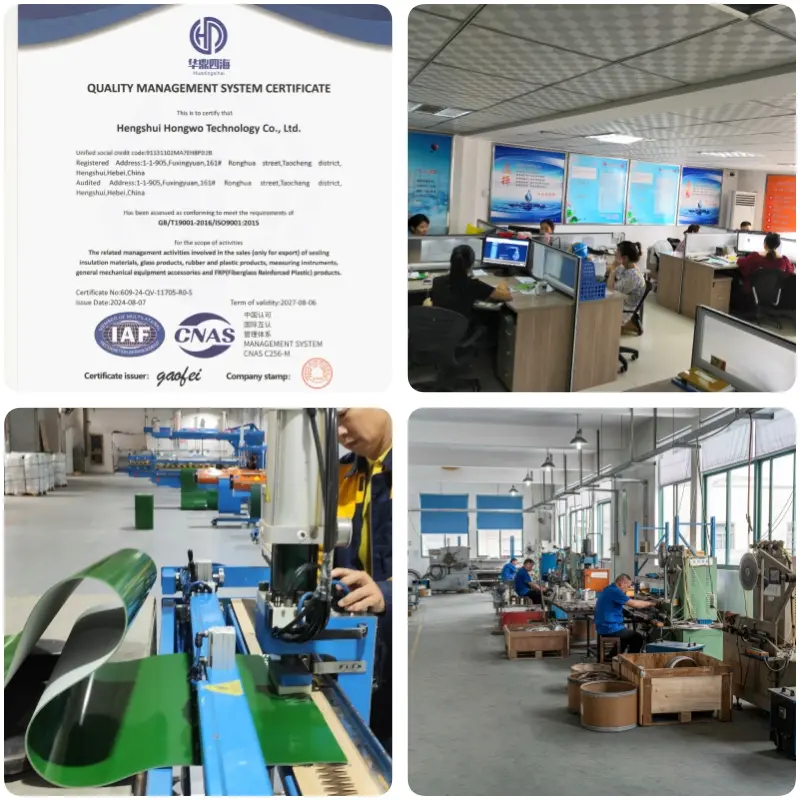
We focus on supplying high-performance exhaust gaskets to overseas distributors, automotive aftermarket, equipment manufacturers, maintenance companies and industrial buyers.
The more technical information you provide, the more accurately we can recommend the appropriate exhaust gasket construction and prepare a quotation.
You can also send a drawing, flange pattern or required specifications after our sales team contacts you.
Tell us your flange pattern, dimensions, operating conditions and material preference. Our team will review your requirements and provide a suitable product recommendation and quotation.
Request a QuoteExplore related sealing products and materials for different industrial equipment and operating conditions.
High-performance gasket made from flexible graphite, delivering outstanding chemical resistance and sealability at extreme temperatures and pressures.
View Graphite Gasket →Metal-reinforced spiral wound gasket with flexible filler material, designed for high-pressure, high-temperature flange connections in petrochemical and power industries.
View Spiral Wound Gasket →Universal chemical-resistant gasket offering a non-stick surface and broad temperature tolerance for sealing aggressive acids, solvents, and process fluids.
View PTFE Gasket →Environmentally friendly compressed fiber sheet formulated with aramid or synthetic fibers as a safe alternative to asbestos for high-temperature gasketing.
View Non-Asbestos Gasket Sheet →