
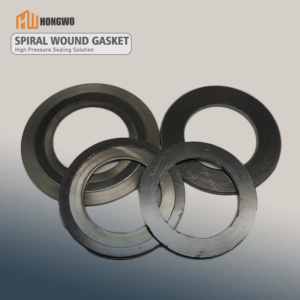
Petrochemical & Refining
Flange sealing for heat exchangers, reactors, columns and piping systems handling hydrocarbons at high temperature and pressure.
Spiral wound gaskets manufactured with alternating V-shaped metal strips and soft filler materials, providing excellent resilience, blow-out resistance and reliable sealing under extreme temperature and pressure fluctuations. Available with inner ring, outer ring or both, conforming to ASME B16.20 and other international standards.
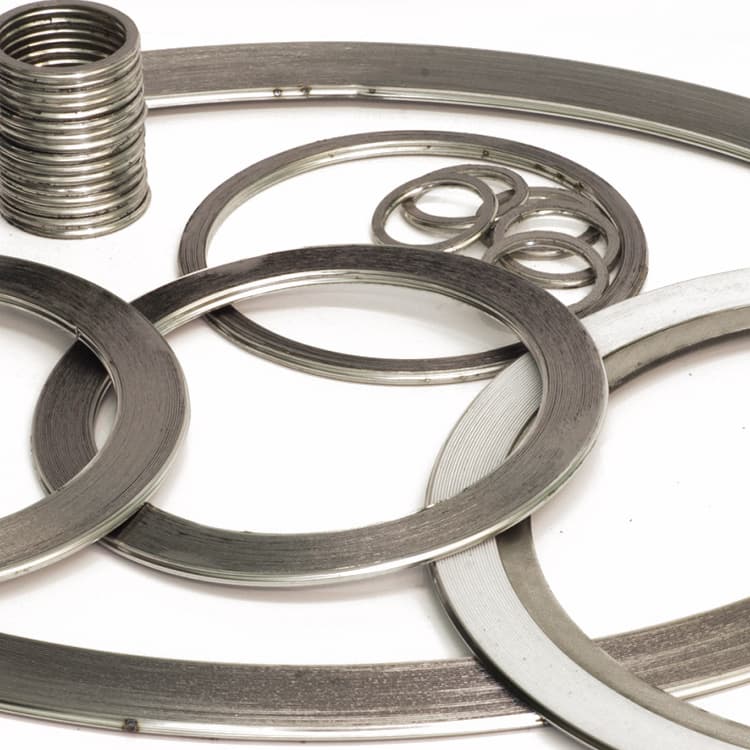
Explore spiral wound gaskets for high-pressure, high-temperature flange sealing applications. Available in various metal strip and filler combinations, with or without inner and outer rings, conforming to ASME B16.20, HG/T 20610, EN 1514 and other standards.
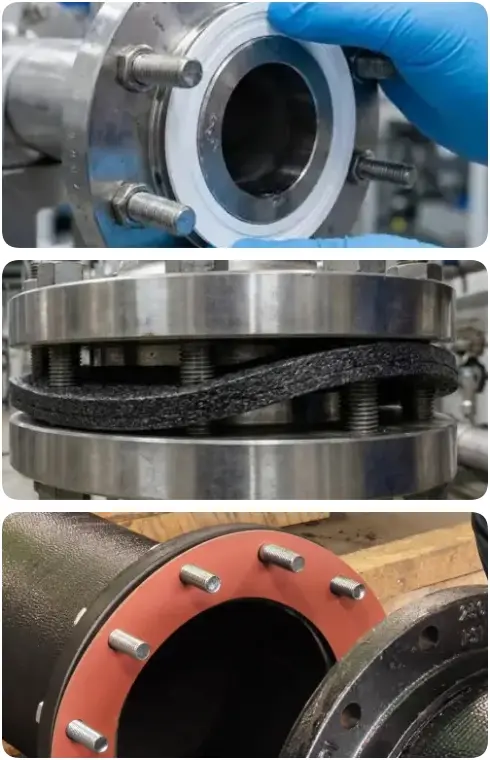
Spiral wound gaskets are semi-metallic gaskets composed of a preformed V-shaped metal strip spirally wound with a soft non-metallic filler material. The metal strip provides structural strength and resilience, while the filler ensures excellent sealing conformity under fluctuating temperature and pressure conditions.
These gaskets are widely used in petrochemical, oil and gas, power generation, and chemical processing industries for flanges rated from Class 150 to Class 2500 and even higher. Common metal strip materials include 304, 316L, 321, 347 stainless steel, Monel, Inconel, and titanium. Filler materials include flexible graphite, PTFE, non-asbestos fiber, and ceramic fiber, each offering different temperature and chemical resistance properties.
Spiral wound gaskets can be supplied as basic type (without rings), with inner ring (IR), with outer ring (OR), or with both inner and outer rings (IR/OR). The rings provide additional centering, compression limiting, and blow-out protection. We supply spiral wound gaskets to overseas distributors, EPC contractors, maintenance companies and OEM customers.
Spiral wound gaskets provide a unique combination of mechanical strength, resilience, and sealing performance that is unmatched by conventional gasket materials in high-pressure and high-temperature applications.
The V-shaped metal winding acts as a spring, providing excellent recovery and maintaining seal integrity under thermal cycling and pressure fluctuations.
Depending on the filler material, spiral wound gaskets can handle temperatures from -200°C to +650°C and pressures up to Class 2500 or higher.
The metal winding and optional compression rings provide excellent resistance to blow-out, making these gaskets ideal for high-pressure and critical services.
Choose from a wide range of metal strip and filler materials to optimize chemical compatibility and temperature resistance for your specific application.
Manufactured to ASME B16.20, EN 1514, HG/T 20610 and other standards, ensuring compatibility with standard flanges and easy replacement.
Suitable for EPC contractors, distributors, OEM customers, maintenance companies and bulk purchasing programs.
Technical performance depends on the metal strip material, filler material, ring configuration and gasket dimensions. The values below are typical for standard spiral wound gaskets and should be confirmed for the selected configuration before ordering.
| Product | Spiral Wound Gasket |
|---|---|
| Metal Strip Materials | 304, 304L, 316, 316L, 321, 347, Monel 400, Inconel 600, Inconel 625, Titanium, etc. |
| Filler Materials | Flexible Graphite, PTFE, Non-Asbestos Fiber, Ceramic Fiber, Mica, etc. |
| Gasket Types | Basic type (without rings), with Inner Ring (IR), with Outer Ring (OR), with Inner & Outer Ring (IR/OR) |
| Temperature Range | Graphite filler: -200°C to +450°C (oxidizing) / +650°C (steam or non-oxidizing); PTFE filler: -200°C to +260°C; Non-asbestos filler: -100°C to +250°C; Ceramic filler: up to +1000°C depending on metal strip. Actual limits depend on materials. |
| Pressure Range | Suitable for flange classes from Class 150 to Class 2500 (PN10 to PN420). Maximum pressure depends on gasket size, flange type and operating temperature. |
| Applicable Standards | ASME B16.20, EN 1514-1/2, HG/T 20610, HG/T 20631, API 601, etc. |
| Gasket Thickness | 3.2 mm, 4.5 mm typical (standard); custom thicknesses available |
| Size Range | DN15 (1/2") to DN600 (24") standard; larger sizes available up to DN3000 (120") or custom |
| Ring Material | Outer ring: carbon steel (galvanized or painted), stainless steel; Inner ring: stainless steel matching metal strip material |
| Supply Form | Individual gaskets, sets per flange, or bulk packaging; customized packaging available |
| Compliance | ISO 9001 quality management and RoHS compliance documentation available where applicable; NACE MR0175 compliance available for sour service applications |
Spiral wound gaskets are manufactured to standard flange dimensions according to ASME B16.20, EN 1514, HG/T 20610 and other standards. The following table lists common nominal sizes with typical thicknesses and ring configurations. Custom sizes are available.
| Nominal Size | Standard Thickness | Typical Flange Class | Ring Configuration |
|---|---|---|---|
| DN15 (1/2") | 4.5 mm | Class 150 – Class 2500 | Basic / IR / OR / IR/OR |
| DN20 (3/4") | 4.5 mm | Class 150 – Class 2500 | Basic / IR / OR / IR/OR |
| DN25 (1") | 4.5 mm | Class 150 – Class 2500 | Basic / IR / OR / IR/OR |
| DN50 (2") | 4.5 mm | Class 150 – Class 2500 | Basic / IR / OR / IR/OR |
| DN80 (3") | 4.5 mm | Class 150 – Class 2500 | Basic / IR / OR / IR/OR |
| DN100 (4") | 4.5 mm | Class 150 – Class 2500 | Basic / IR / OR / IR/OR |
| DN150 (6") | 4.5 mm | Class 150 – Class 2500 | Basic / IR / OR / IR/OR |
| DN200 (8") | 4.5 mm | Class 150 – Class 2500 | Basic / IR / OR / IR/OR |
| DN300 (12") | 4.5 mm | Class 150 – Class 2500 | Basic / IR / OR / IR/OR |
| DN600 (24") | 4.5 mm | Class 150 – Class 2500 | Basic / IR / OR / IR/OR |
* Reference nominal sizes and thicknesses are shown for procurement guidance. Actual dimensions conform to the applicable flange standard. Larger sizes and custom dimensions are available subject to specification.
Spiral wound gaskets are the preferred choice for critical flange connections in high-pressure, high-temperature and corrosive environments across various industries.
Flange sealing for heat exchangers, reactors, columns and piping systems handling hydrocarbons at high temperature and pressure.
Gaskets for wellheads, manifolds, pipelines and processing equipment requiring reliable sealing under extreme conditions.
Steam turbine flanges, boiler manholes, and piping systems in thermal and nuclear power plants.
Flanges for pumps, valves and equipment handling aggressive chemicals, solvents and corrosive media.
Sanitary and high-purity flange connections using PTFE-filled spiral wound gaskets.
Flange sealing for marine piping systems, exhaust systems and engine rooms requiring robust gaskets.
The correct spiral wound gasket configuration should be selected based on flange standard, pressure class, operating temperature, chemical media and required ring type.
Identify the flange standard (ASME, EN, HG, etc.) and nominal size to ensure the gasket dimensions match the flange facing.
Choose metal strip material based on corrosion resistance and temperature; choose filler material (graphite for high temp, PTFE for chemical resistance, etc.) based on media.
Determine if inner ring, outer ring, or both are required for centering, compression limiting and blow-out protection.
Confirm temperature, pressure, and chemical exposure to select the optimal material combination and gasket style.
Precision winding, consistent filler distribution and accurate ring dimensions are critical for reliable spiral wound gasket performance.
Metal strips are precision-formed into V-shaped profiles, and filler materials are prepared to the required width and thickness.
The V-shaped metal strip and filler material are alternately wound under controlled tension to form the spiral body of the gasket.
Inner and/or outer rings are assembled, and the finished gasket is inspected for dimensions, density, and surface quality.
Gaskets are packaged individually or in sets with protective interleaving, ready for export.
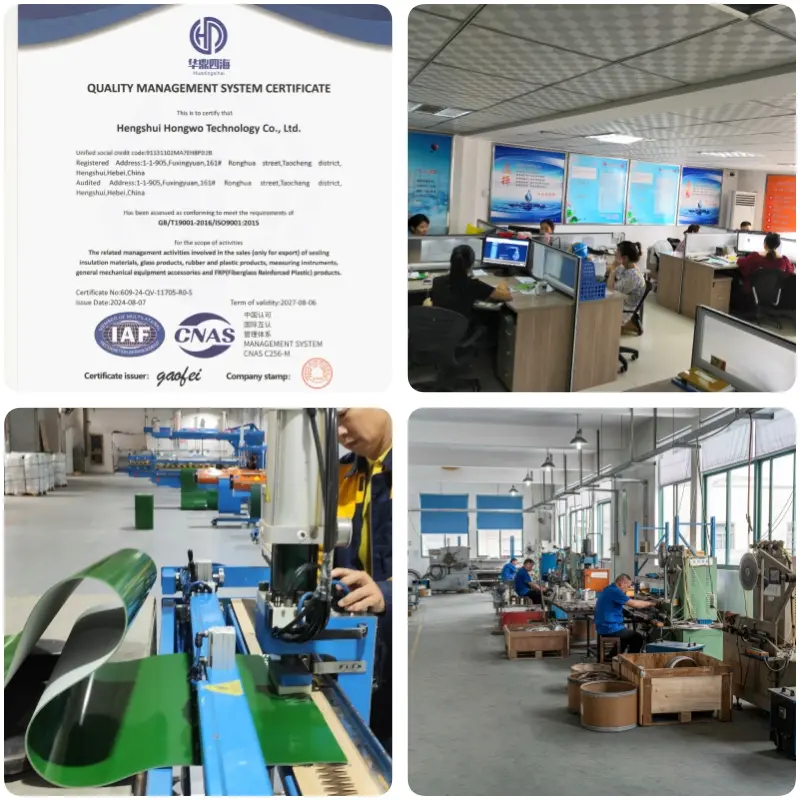
We focus on supplying industrial gaskets to overseas distributors, EPC contractors, equipment manufacturers, maintenance companies and industrial buyers.
The more technical information you provide, the more accurately we can recommend the appropriate spiral wound gasket configuration and prepare a quotation.
You can also send a drawing, flange details or required specifications after our sales team contacts you.
Tell us your flange standard, size, pressure class, operating conditions and media. Our team will review your requirements and provide a suitable product recommendation and quotation.
Request a QuoteExplore related sealing products and materials for different industrial equipment and operating conditions.
Universal chemical-resistant gasket offering a non-stick surface and broad temperature tolerance for sealing aggressive acids, solvents, and process fluids.
View PTFE Gasket →High-performance gasket made from flexible graphite, delivering outstanding chemical resistance and sealability at extreme temperatures and pressures.
View Graphite Gasket →Flexible elastomer gasket available in various compounds for sealing, cushioning, and fluid resistance in general industrial applications.
View Rubber Gasket →Environmentally friendly compressed fiber sheet formulated with aramid or synthetic fibers as a safe alternative to asbestos for high-temperature gasketing.
View Non-Asbestos Gasket Sheet →