Your High-Temperature Sealing Problem May Be Hiding in the Smallest Gaps
Most engineers focus on boards, blankets, and modules when designing thermal insulation systems. But the real failure points are often the details—furnace door corners, expansion joint edges, cable wraps, gasket reinforcement. These areas demand a material that is flexible, strong, heat-resistant, and easy to process.
That material is Ceramic Fiber Twisted Yarn.
It is not a bulky insulation layer. It is the component that holds the line in complex shapes, tight spaces, and punishing thermal cycles. If your production line is struggling with heat sealing or electrical insulation in detailed areas, it is time to take a closer look at Ceramic Fiber Twisted Yarn.
What It Actually Is
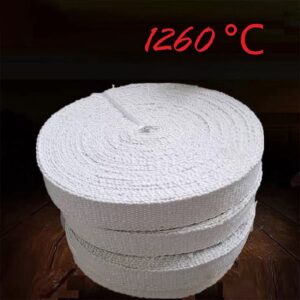
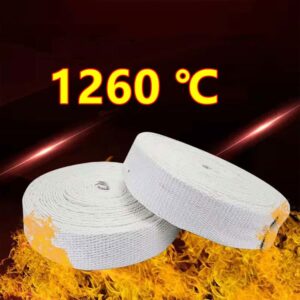
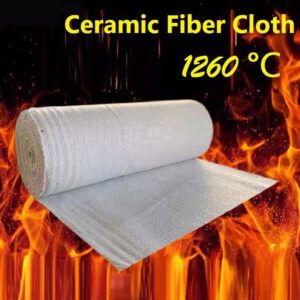
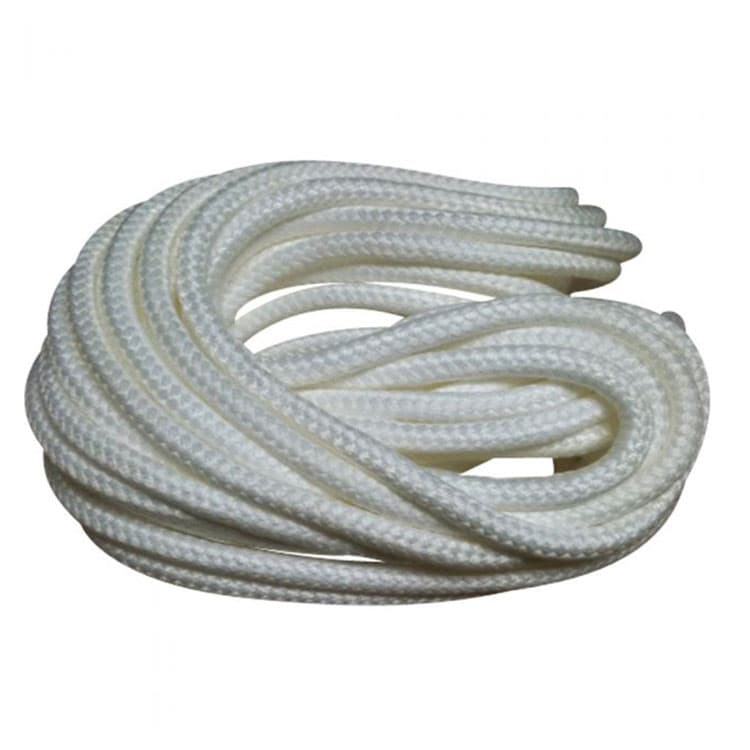
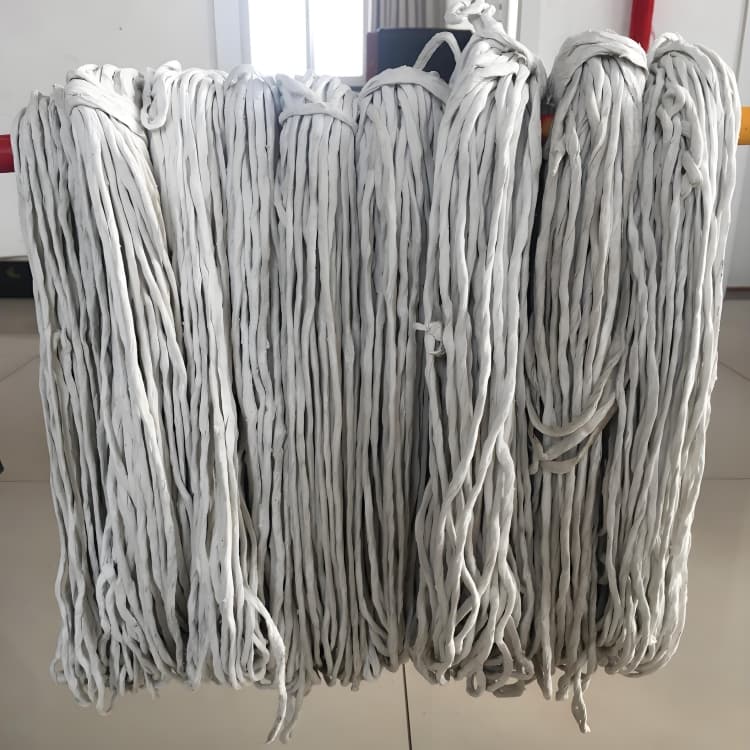
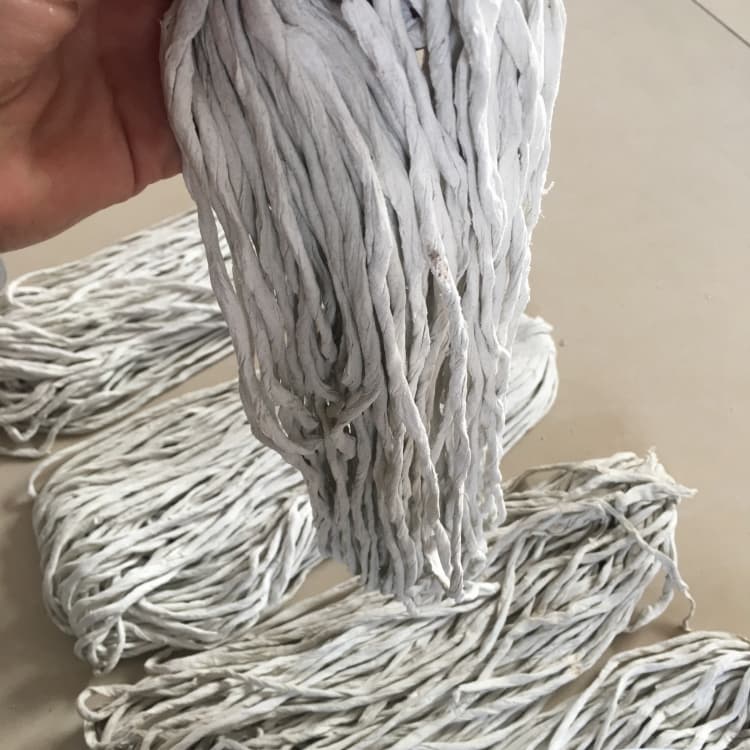
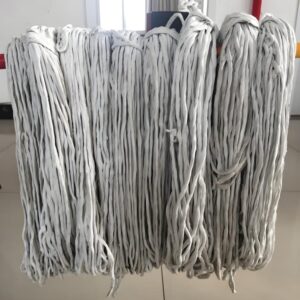
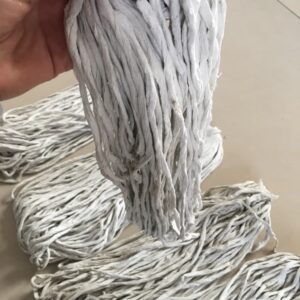
Ceramic Fiber Twisted Yarn is a continuous yarn made from high-purity alumina-silicate fibers that have been twisted under controlled tension. Unlike loose fiber or blanket, this yarn can be woven, wrapped, sewn, and braided. It combines the temperature resistance of ceramic fiber with the processability of a textile.
Our factory produces Ceramic Fiber Twisted Yarn directly from raw fiber to finished yarn. Every roll is checked for twist consistency, tensile strength, and linear density. That consistency is what your downstream process depends on—whether you are braiding rope, sewing gaskets, or wrapping cables.
Why Buyers Switch to Ceramic Fiber Twisted Yarn
It takes heat that fiberglass cannot.
Fiberglass rope starts to soften above 400°C. Ceramic Fiber Twisted Yarn operates continuously at 1050°C and survives short-term exposure up to 1260°C. That difference means longer replacement intervals and fewer unplanned shutdowns.
It insulates with much less heat loss.
The porous structure of the ceramic fibers gives Ceramic Fiber Twisted Yarn extremely low thermal conductivity. Sealing ropes braided from this yarn cut heat loss around furnace doors and pipe joints significantly.
It insulates electrically, not just thermally.
In induction heating, electric furnaces, and high-temperature cable protection, Ceramic Fiber Twisted Yarn provides reliable electrical insulation while resisting heat. It does not conduct electricity and releases no harmful gases at elevated temperatures.
It is soft but does not fall apart.
The twisting process gives the yarn enough tensile strength to survive weaving and wrapping, while keeping it flexible enough to go around tight bends. Compared to ceramic fiber tape, Ceramic Fiber Twisted Yarn is far better for jobs that require on-site forming.
It contains no asbestos and meets international safety standards.
Our Ceramic Fiber Twisted Yarn is completely free of asbestos and hazardous binders, complying with global environmental and occupational health regulations.
Where Ceramic Fiber Twisted Yarn Is Already Working
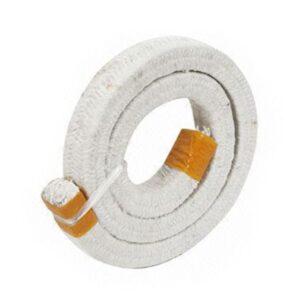
Furnace door and kiln car seals. Ropes braided from Ceramic Fiber Twisted Yarn seal high-temperature furnace doors and kiln car joints. They resist compression, recover well, and handle repeated thermal shock.
High-temperature cable and thermocouple protection. In steel mills, glass plants, and power stations, Ceramic Fiber Twisted Yarn is wrapped around cables and thermocouple leads to protect them from radiant heat and slag splash.
Expansion joint packing. Combined with ceramic fiber blanket, Ceramic Fiber Twisted Yarn fills narrow expansion joints and prevents hot gas leakage. It is easier to install than loose fiber and withstands gas flow better.
Gasket and washer reinforcement. Sewing Ceramic Fiber Twisted Yarn along the edges of high-temperature gaskets improves tear resistance and mechanical strength under heat.
Welding shields and heat barriers. Woven into nets or curtains, Ceramic Fiber Twisted Yarn blocks spatter and protects nearby equipment during welding or thermal cutting.
Technical Specifications
| Parameter | Standard Value |
|---|---|
| Classification Temperature | 1260°C |
| Continuous Operating Temperature | 1050°C |
| Fiber Composition | Alumina-silicate |
| Linear Density | 1.0 / 2.0 / 3.0 g/m (custom available) |
| Twist Direction | S / Z |
| Filament Diameter | 3 – 5 μm |
| Moisture Content | ≤ 1% |
| Color | White |
| Packaging | Roll, 1 – 5 kg per roll |
Actual parameters can be adjusted to customer requirements.
Custom Twisting, Coating, and Reinforcing
Different applications demand different yarn properties. Some customers need glass fiber or metal wire reinforcement. Others want graphite or PTFE coating for better abrasion resistance. Some require specific twist levels to match high-speed braiding machines.
We support:
-
Custom linear density and twist level
-
Two-ply or multi-ply twisted construction
-
Stainless steel wire, glass fiber, or aramid reinforcement
-
Surface treatment: graphite, PTFE, silicone oil
-
Custom roll weight and packaging
-
Finished products made from Ceramic Fiber Twisted Yarn: ropes, tapes, sleeves, and braided parts
Tell us your operating temperature and media conditions. We will recommend the right Ceramic Fiber Twisted Yarn specification.
Packaging and Lead Time
Every roll of Ceramic Fiber Twisted Yarn is wrapped in moisture-proof film and packed in cardboard boxes. Export orders use reinforced wooden crates. Standard specifications ship within 3–5 working days. Custom products typically take 10–15 working days.
Straight Answers to What Buyers Ask
Q: Can Ceramic Fiber Twisted Yarn touch flame directly?
Yes. But long-term direct flame impingement accelerates fiber shrinkage. For continuous flame exposure, choose a thicker braided product or one with metal wire reinforcement.
Q: Does it smoke during first heat-up?
A small amount of spinning lubricant volatilizes during the first heating, producing slight white smoke. After that, there are no further emissions. No asbestos is present.
Q: What is the minimum order quantity?
Standard specifications start from one roll. Custom specifications usually start from 50 kg.
Q: Can I get a sample for testing?
Yes. Standard samples are free. Custom samples only require a material fee, which is refunded on your first bulk order.