Product Overview
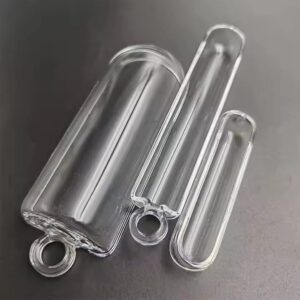
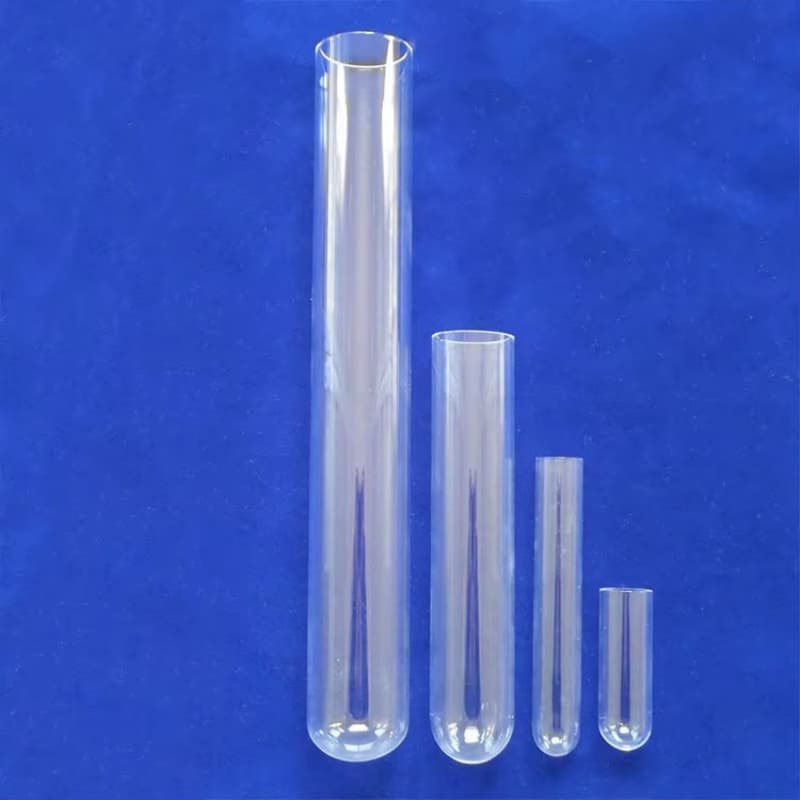
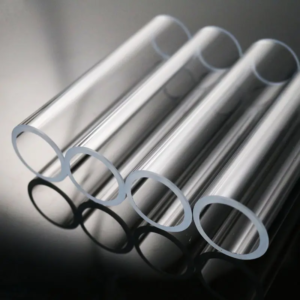
Our Quartz Test Tube is manufactured from high-purity fused silica (SiO₂ ≥ 99.99%), offering exceptional thermal stability, optical clarity, and chemical resistance. Designed for demanding laboratory and industrial applications, this Quartz Test Tube withstands extreme temperature cycling, aggressive chemicals, and high-energy radiation without degradation.
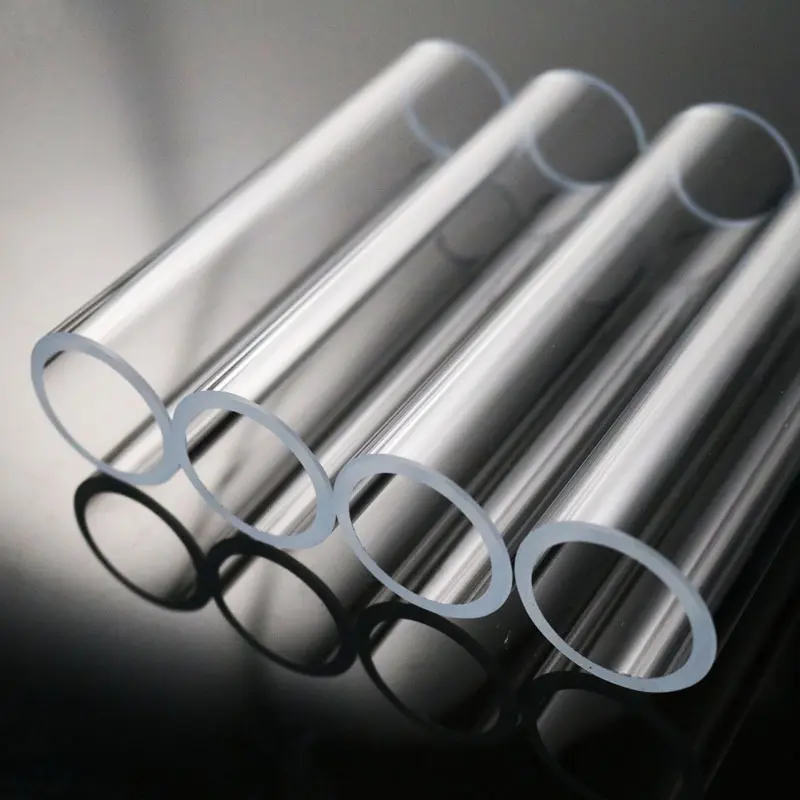
Unlike borosilicate glass, a Quartz Test Tube can operate continuously at temperatures up to 1100°C and withstand thermal shock from rapid heating or cooling. This makes it ideal for chemical synthesis, material research, semiconductor processing, and high-temperature analysis. Each Quartz Test Tube is precision-formed with uniform wall thickness and a smooth fire-polished rim to ensure safe handling and reliable performance.
Key Advantages:
-
Extreme temperature resistance up to 1100°C (continuous)
-
Excellent optical transmission from UV to IR spectrum
-
Superior chemical inertness against most acids, solvents, and reagents
-
High purity prevents sample contamination
-
Excellent thermal shock resistance for rapid heating and cooling
-
Available in standard and custom sizes with optional caps and stoppers
Technical Specifications
| Parameter | Value |
|---|---|
| Product Name | Quartz Test Tube |
| Material | High-purity fused silica / quartz (SiO₂ ≥ 99.99%) |
| Outer Diameter | 8 mm – 50 mm (custom available) |
| Wall Thickness | 0.8 mm – 3.0 mm |
| Length | 50 mm – 300 mm (custom available) |
| Temperature Range | -100°C to +1100°C (continuous) / +1300°C (short term) |
| Thermal Shock Resistance | ΔT up to 1000°C |
| Chemical Resistance | Resistant to acids (except HF), alkalis, solvents; pH 1–14 |
| Optical Transmission | >90% (visible), >85% (UV 200–300 nm) |
| Density | 2.2 g/cm³ |
| Coefficient of Thermal Expansion | 0.55 × 10⁻⁶ /°C (20–300°C) |
| Packaging | Individually wrapped, foam-lined export cartons |
| Certifications | ISO 9001:2015, RoHS / REACH compliant, USP Class VI available |
Applications
This Quartz Test Tube is widely used across various industries:
-
Chemical Laboratories – high-temperature reactions, sample digestion, ashing
-
Semiconductor & Electronics – wafer cleaning, diffusion processes, chemical vapor deposition
-
Material Science – thermal analysis, sintering studies, crystal growth experiments
-
Pharmaceutical & Biotech – sterilization, lyophilization, sample storage under extreme conditions
-
Environmental Testing – trace metal analysis, sample digestion for ICP/AA
-
Optics & Photonics – UV light exposure, photochemical reactions
-
Educational & Research Institutions – advanced chemistry and physics experiments
Why Choose Our Quartz Test Tube?
1. High-Purity Fused Silica Material
Each Quartz Test Tube is made from premium fused silica with total impurities below 10 ppm. This ultra-high purity eliminates the risk of sample contamination and ensures reliable analytical results in trace-level applications.
2. Outstanding Thermal Performance
A Quartz Test Tube can be heated to 1100°C continuously and briefly to 1300°C without deformation. Its low thermal expansion coefficient provides exceptional resistance to thermal shock, allowing the tube to be transferred directly from a hot furnace to cold water without cracking.
3. Broad Optical Transmission
The Quartz Test Tube offers excellent transparency from 200 nm (UV) to 2500 nm (IR). This makes it suitable for photochemistry, UV sterilization studies, and any application where light transmission through the vessel is critical.
4. Superior Chemical Durability
Quartz is inert to most acids, solvents, and organic compounds. The Quartz Test Tube will not leach ions or react with samples, making it the vessel of choice for trace metal analysis, semiconductor processing, and high-purity chemical handling.
5. Precision Manufacturing
Our Quartz Test Tube is produced with tight dimensional tolerances and uniform wall thickness. The open end is fire-polished smooth to prevent cuts and facilitate the use of silicone or PTFE stoppers.
6. Customization and OEM Support
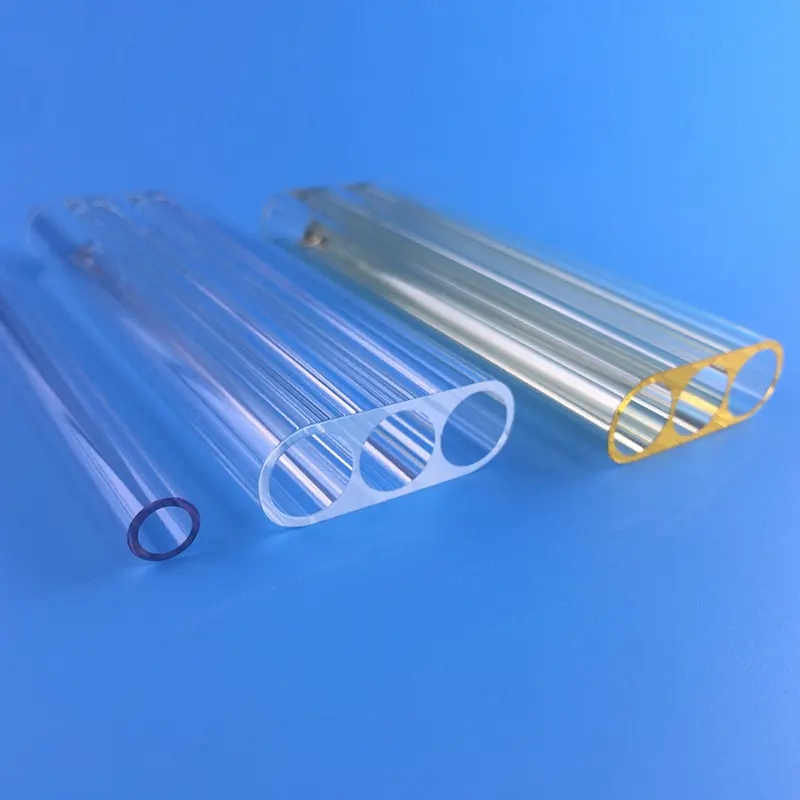
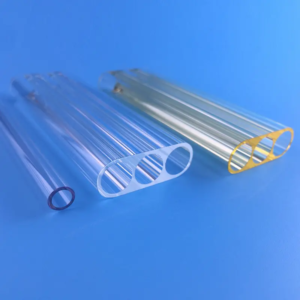
We can manufacture Quartz Test Tubes in any diameter, length, wall thickness, or shape. Custom features include flat bottoms, threaded necks, quartz caps, side arms, and graduated markings. Private labeling is also available.
Packaging & Supply
-
Standard MOQ: 100 pieces per size
-
Trial Order: 20–50 pieces accepted for first-time customers
-
Packaging Types: Individual poly-sleeve wrapping, partitioned foam cartons, or bulk export packaging
-
Lead Time: 5–10 working days for stock sizes; 10–20 days for custom dimensions
-
Sample: Free sample Quartz Test Tube available (customer provides courier account)
-
OEM/ODM: Custom sizes, special configurations, and private labeling available
Frequently Asked Questions
Q: What is the maximum temperature a Quartz Test Tube can withstand?
A: A standard Quartz Test Tube can be used continuously at 1100°C and briefly at 1300°C. For applications requiring even higher temperatures, special high-purity quartz may be used, but continuous service above 1100°C is not recommended as it may cause devitrification over time.
Q: Can this Quartz Test Tube be used with hydrofluoric acid (HF)?
A: No. Like all quartz and silica products, this Quartz Test Tube is attacked by hydrofluoric acid and hot concentrated phosphoric acid. It is suitable for most other acids, including hydrochloric, nitric, and sulfuric acid.
Q: Is the Quartz Test Tube suitable for autoclaving?
A: Yes, the Quartz Test Tube can be autoclaved repeatedly without degradation. Its low thermal expansion makes it highly resistant to the rapid temperature changes during autoclave cycles.
Q: Do you offer Quartz Test Tubes with caps or stoppers?
A: Yes, we can supply matching quartz caps, PTFE stoppers, or silicone plugs for our Quartz Test Tube range. Please specify your requirements when requesting a quote.
Q: What is the difference between quartz and borosilicate glass test tubes?
A: A Quartz Test Tube offers significantly higher temperature resistance (1100°C vs. 500°C), better thermal shock resistance, higher purity, and broader optical transmission compared to borosilicate glass. Quartz is preferred for high-temperature, high-purity, and UV-related applications, though it is more expensive.
Ready to Source High-Purity Quartz Test Tubes?
Contact our sales team today for a competitive quotation, free sample evaluation, or technical assistance in selecting the right Quartz Test Tube for your application.