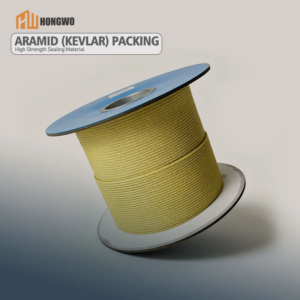
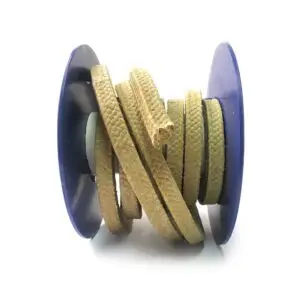
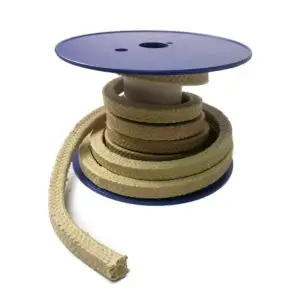
1. Application Scenarios
Aramid fiber packing is engineered to excel in the harshest industrial environments. Our clients rely on it for critical sealing applications in:
- Chemical Processing Plants: Resistant to aggressive acids (e.g., sulfuric acid) and alkalis, it ensures leak-free performance in reactors and pumps.
- Oil & Gas Facilities: Withstands high-pressure wellheads (up to 100 bar) and extreme temperatures (-50°C to 300°C), ideal for valve stems and pipeline joints.
- Power Generation: Used in turbine shaft seals and boiler feed pumps, where steam resistance and longevity are non-negotiable.
“We’ve seen firsthand how aramid fiber packing transforms operational reliability in sectors where failure is not an option.”
| Parameter | Description | Common Values | Remarks |
|---|---|---|---|
| Material Composition | Base fiber material | 100% Aramid (Kevlar® or equivalent) | May include PTFE/graphite lubricants |
| Temperature Range | Continuous operating temperature | -100°C to +300°C | Short-term peaks up to 350°C |
| Pressure Resistance | Maximum sealing pressure | Up to 150 bar (2175 psi) | Higher with reinforced designs |
| pH Resistance | Chemical stability range | 2 – 12 pH | Limited acid/alkali resistance |
| Density | Packing material density | 1.44 g/cm³ | Affects compression & durability |
| Tensile Strength | Fiber breaking strength | 3,000 MPa | Superior to most synthetic fibers |
| Thermal Conductivity | Heat transfer capability | 0.04 W/m·K | Low conductivity reduces heat transfer |
| Friction Coefficient | Dynamic friction against metal shafts | 0.10 – 0.15 | Lower with lubricated versions |
| Compression Recovery | Ability to rebound after compression | ≥ 85% | Critical for long-term sealing |
| Chemical Compatibility | Resistance to specific chemicals | Resistant to oils, fuels, steam, weak acids/alkalis | Not suitable for strong acids/oxidizers |
| Shaft Speed | Maximum recommended RPM | 15 – 25 m/s | Varies by gland design |
| Available Sizes | Standard cross-sectional dimensions | 3mm – 50mm (1/8″ – 2″) | Custom sizes available |
| Certifications | Industry compliance standards | FDA, NSF, ISO 9001, API 622 | For food, water, and industrial use |
2. Product Parameters
Our Aramid fiber packing is defined by precision:
- Temperature Range: -50°C to +300°C (short-term peaks at 350°C).
- Pressure Tolerance: 25–100 bar (static) / 10–50 bar (dynamic).
- Chemical Compatibility: Resists 90% of industrial chemicals, including hydrocarbons, chlorides, and solvents.
- Density: 1.4–1.6 g/cm³, 40% lighter than metallic alternatives.
3. Product Features
Why choose our aramid fiber packing?
- Unmatched Durability: Reinforced with PTFE lubrication, reducing friction by 30% and extending service life.
- Eco-Friendly: Asbestos-free, aligning with EU REACH and OSHA regulations.
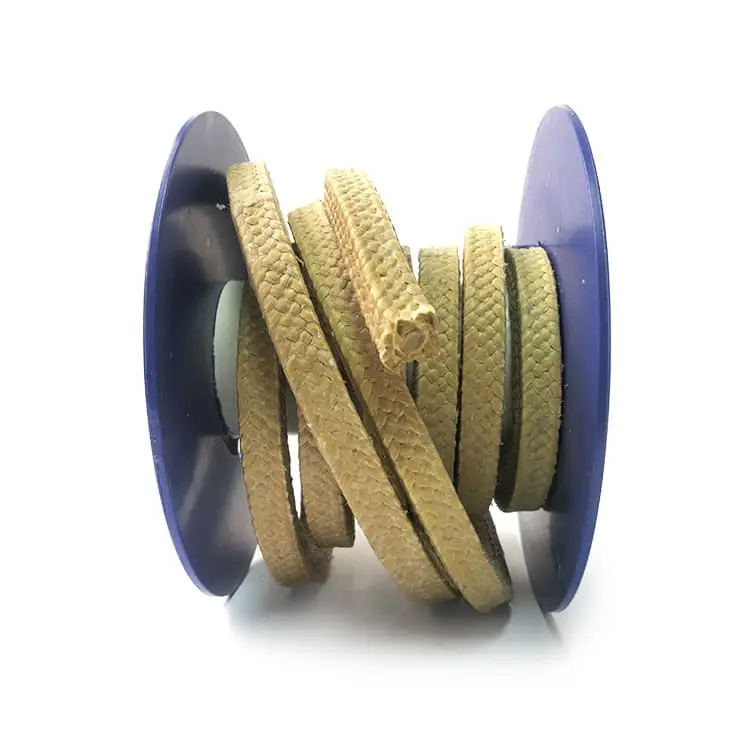
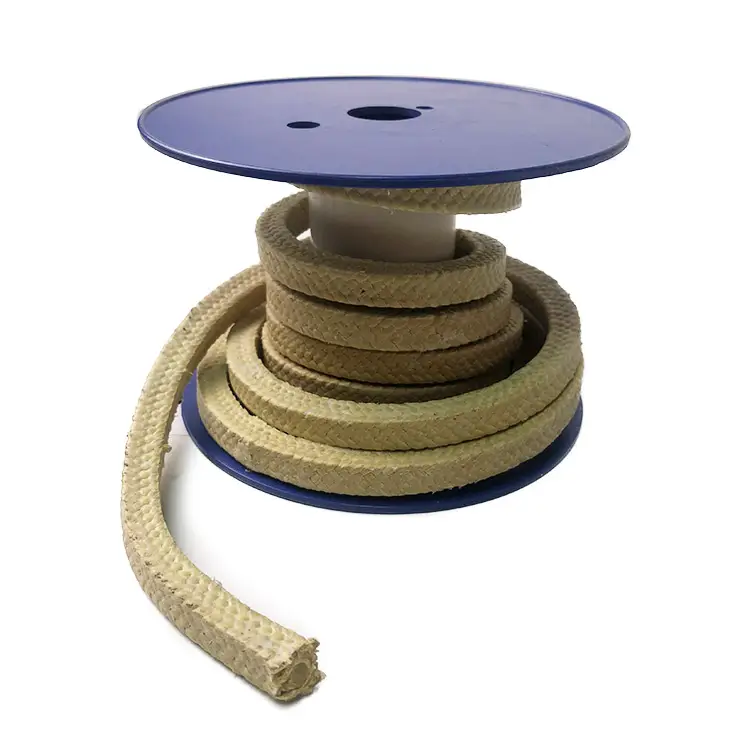
- Adaptability: Customizable braiding patterns (e.g., square, round) for optimal seal conformity.
“We’ve optimized every fiber to deliver a solution that outlasts competitors by 2x.”
4. Authority & Credibility
Our product meets stringent global standards:
- Certifications: UL 94 V-0 flame resistance, ISO 9001 manufacturing compliance.
- Case Studies: A refinery in Texas reported zero leaks for 18 months post-installation.
- Third-Party Testing: ASTM D4716 validated its 10,000-cycle durability under 80 bar.
5. Installation & Replacement
Step 1: Clean the stuffing box thoroughly; residual debris shortens packing life.
Step 2: Wrap aramid fiber packing in staggered layers, compressing gradually to 70–80% density.
Step 3: Post-installation, run equipment at low pressure for 24 hours to seat the packing.
Replacement Tip: Monitor torque—a 20% increase signals wear. Average replacement cycle: 12–18 months.
6. Maintenance Best Practices
- Lubrication: Apply graphite-based grease quarterly to minimize heat buildup.
- Inspection: Use thermal cameras to detect hotspots (>150°C) indicating uneven compression.
- Storage: Keep in dry, UV-protected areas to prevent pre-installation degradation.
7. Critical Precautions
- Avoid Over-Tightening: Excessive compression reduces flexibility, risking shaft scoring.
- Chemical Exposure: Never use with concentrated nitric acid—PTFE lubricant degrades at pH <1.
- Break-In Period: Gradual pressure ramp-up prevents fiber shear during initial runs.
8. Lessons from the Field
“In a Saudi Arabian desalination plant, combining our packing with a hybrid carbon/aramid layer reduced maintenance costs by 45%.”
- Pro Tip: Pair with ceramic-coated shafts to halve wear rates.
9. FAQs
Q1: Can it handle cryogenic LNG applications?
A: Yes, but specify sub-zero PTFE grades for temperatures below -100°C.
Q2: How does it compare to graphite packing?
A: Superior in abrasive media (e.g., slurries)—graphite erodes 3x faster.
Q3: Is laser-cut customization available?
A: Yes, for irregular geometries like oval valve stems.
10. Industry Trends
- Sustainability: 60% of clients now demand carbon-neutral packing materials—we’re piloting recycled aramid fibers.
- Smart Integration: RFID-tagged packing for real-time wear analytics (launching Q4 2025).
- High-Temperature Demand: Petrochemical sector drives R&D for 400°C-capable variants.
Why Trust Us?
With 15 years of R&D and 10,000+ global installations, our aramid fiber packing isn’t just a product—it’s a commitment to industrial resilience. “Join the 85% of Fortune 500 plants that refuse to compromise on sealing excellence.”